

Understanding Contact Lens Measurements: Diameter Explained
What Does DIA Mean on Your Prescription?
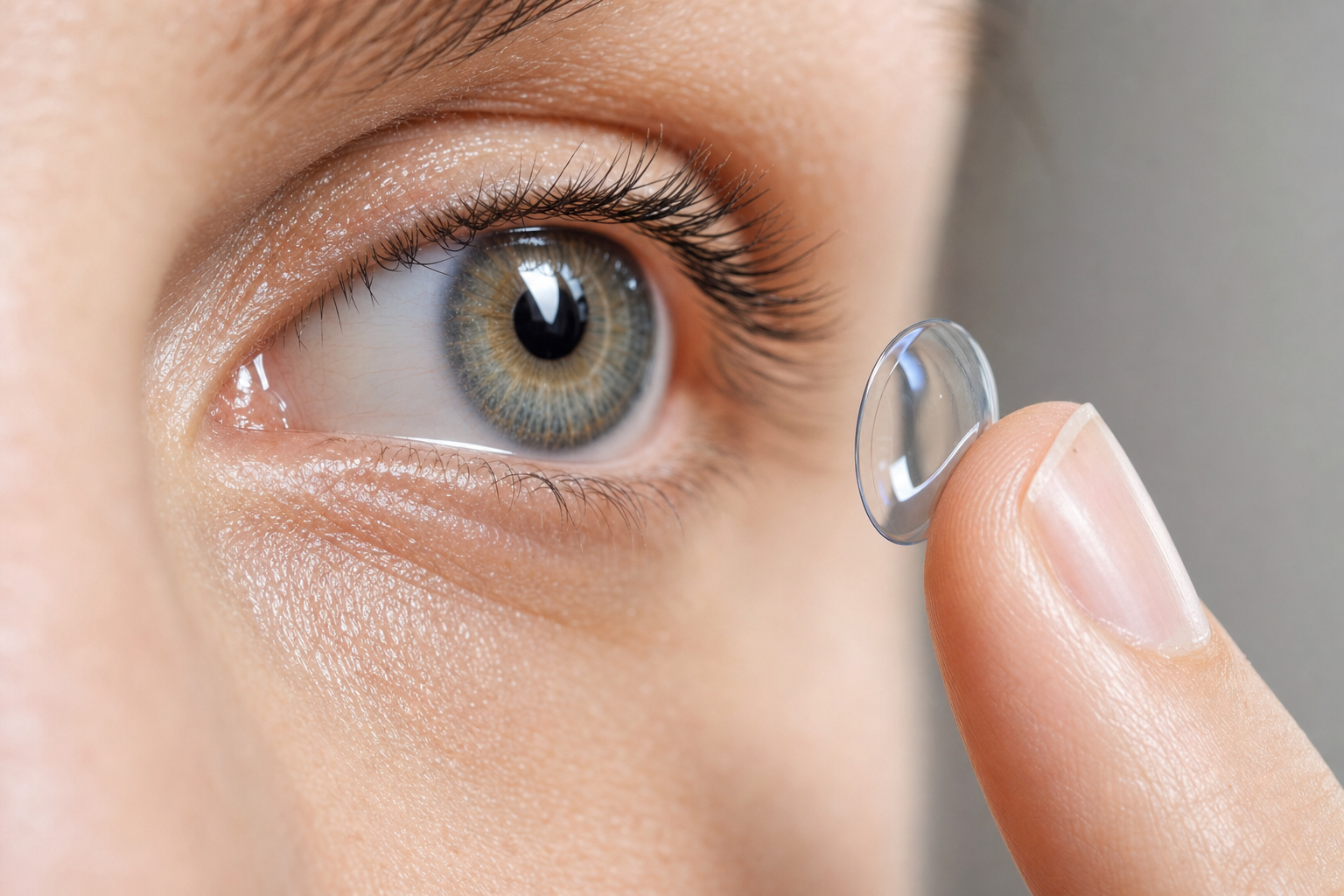
DIA stands for diameter and refers to the total width of your contact lens measured from one edge to the other. This measurement appears on your contact lens prescription among other specifications and tells you exactly how wide your lens is in millimeters. The diameter ranges between 13.8mm and 14.5mm for soft contact lenses.
You'll encounter 14.0mm and 14.2mm most often. Your eye care professional determines this measurement based on the size of your cornea and overall eye geometry. You'll find this number printed on your contact lens box, abbreviated as DIA followed by the measurement.
The diameter ensures your lens covers the correct area of your eye and sits securely without being too tight. A lens with the proper diameter covers your entire cornea and extends onto the white part of your eye, known as the sclera. This positioning helps the lens stay centered and stable when you blink.
How Diameter Is Different from Base Curve
Diameter measures the width of your lens, but base curve (abbreviated as BC) measures something different. The base curve refers to the curvature of the back surface of your contact lens, which must match the curvature of your cornea. Base curve measurements range from 8.0mm to 10.0mm.
Your prescription will show both measurements together, formatted as BC: 8.7 DIA: 14. These two numbers address different aspects of lens fit. The base curve determines how the lens curves to match your eye's shape. The diameter determines how much surface area the lens covers.
A contact lens prescription displays both measurements because they work together to create the overall lens geometry. Neither measurement works on its own. A flatter base curve might require a larger diameter to maintain proper centering. A steeper base curve might work better with a smaller diameter. This relationship between the two measurements creates what's called the sagittal depth of the lens, which determines how the curve sits on your eye.
Why Both Contact Lens Sizes Matter
Both measurements influence how your lenses fit, feel and function throughout the day. The diameter ensures the lens covers the necessary area of your cornea and remains stable, preventing it from sliding off-center when you blink. The base curve ensures the lens sits snugly against your cornea's natural shape.
These measurements affect lens mobility, which plays a significant role in maintaining healthy tear film circulation beneath the lens. Proper movement allows fresh tears to flush away debris while delivering oxygen to your corneal tissue. Your lens should exhibit subtle movement with each blink, approximately 1-2 millimeters, that indicates healthy tear exchange.
You'll experience consistent visual acuity without awareness of the lens presence when contact lens sizes are matched to your eye. But incorrect measurements can cause discomfort, redness and blurred vision. An incorrect fit may also reduce oxygen flow to your cornea, which can lead to complications over time.
Different lens types require different diameter specifications. Soft contact lenses measure between 13.0mm and 14.5mm, while rigid gas permeable lenses are smaller at 9.0mm to 10.5mm. Scleral lenses, which are much larger, range between 15.0mm and 24.0mm. Your optometrist considers both base curve and diameter when determining the best fit for your eyes during a contact lens fitting.
Does Diameter Matter for Contact Lenses?
Your contact lens diameter plays a direct role in how your lenses perform from the moment you insert them until you remove them at night. The width of your lens determines initial comfort and also affects stability, vision quality, and long-term eye health.
Effect on Lens Fit and Positioning
Diameter determines how much of your eye surface the lens covers and how it interacts with your eyelids. The lens edges rest smoothly on your eye surface when the diameter matches your eye anatomy, reducing awareness during wear. This positioning allows natural movement with each blink and maintains stable centration over your pupil.
A lens that's too small may not cover enough of your cornea or might move too much when you blink. Excessive shifting creates friction on your eye surface and can lead to irritation. A lens that's too large extends too far beyond your cornea and potentially interferes with normal eye functions. Large diameter lenses may feel tight or restrict movement, preventing the subtle mobility that healthy tear circulation needs.
Diameter affects how well the lens centers over your pupil. Poor centration causes fluctuating or blurry vision since the lens shifts position during blinking. Research on keratoconus patients showed that lenses with 9.6mm diameter decentered the least among all lens types. Stable positioning supports consistent clarity throughout the day.
Diameter's Effect on Comfort Throughout the Day
You'll experience minimal lens awareness during wear when diameter is correct. The edges conform to your eye contour without creating pressure points or gaps. But incorrect diameter can contribute to dryness, redness, or irritation.
A lens that fits too tightly may limit tear exchange beneath the lens. Your tears deliver oxygen and nutrients to your cornea and flush away debris. Restricted tear flow can cause discomfort that worsens over time. Meanwhile, a lens that shifts too much increases friction on your eye surface, creating a sensation of grittiness or foreign body awareness.
Studies looking at different diameter options found that comfort ratings varied by a lot based on lens diameter and individual eye shape. Smaller diameters provided better comfort for centered cone types, while oval cone types experienced improved comfort with larger diameter lenses. This shows how diameter requirements differ based on your unique eye geometry.
How Diameter Affects Different Lens Types
Soft contact lenses measure between 13.0mm and 14.5mm. Their larger diameter extends beyond the cornea onto the sclera, which helps with centering and stability. The flexible material conforms to your eye shape, and the extended diameter keeps the lens stable during movement.
Rigid gas permeable lenses are smaller, between 9.0mm and 10.5mm. The smaller diameter means they only cover the cornea. This requires more precise fitting since there's less surface area to maintain position.
Scleral lenses range between 15.0mm and 24.0mm and vault over the entire corneal surface. Specialty toric lenses for astigmatism may have different diameters to help with proper orientation. Each lens design behaves differently on the eye, which is why switching between lens types requires professional evaluation.
How to Find Your Correct Contact Lens Diameter
Finding your correct contact lens diameter starts with understanding where this information comes from and how professionals determine the right measurement for your eyes.
Reading Your Current Prescription
Your contact lens prescription contains your diameter measurement, listed as "DIA" followed by a number between 13 and 15. You can locate this information in three places: on your contact lens box, on the foil blister pack that holds each lens, and on your written prescription. The format usually appears as "BC: 8.7 DIA: 14.0" alongside your lens power and brand name.
Enter these values exactly as prescribed when you order lenses. Even a small difference in diameter affects how the lens positions on your eye. Your prescription is tailored to your eyes and should never be shared with anyone else.
Professional Fitting Process
Your eye care professional determines your diameter through a detailed contact lens fitting that involves several specialized measurements. The process begins with an original eye health check to look into your eyes for any conditions that might affect lens wear.
Your optometrist uses specialized instruments to measure your cornea's shape and curvature during the fitting. A keratometer measures corneal curvature, while corneal topography creates a detailed map of your eye's surface. These measurements prove critical in finding lenses that fit just right.
Your provider also assesses your tear film to confirm your eyes produce sufficient moisture for comfortable lens wear. The Schirmer test places small paper strips under your eyelids to measure tear production, or fluorescein dye checks how quickly tears evaporate. Pupil and iris measurements using tools like a slit lamp ensure the lens centers and lines up with your optical zone.
Your optometrist discusses your lifestyle and daily activities to recommend lenses that suit your specific needs throughout the appointment.
Trial Lens Evaluation
The fitting process transitions to trial lenses once measurements are complete. Your doctor places trial contacts on your eyes to assess fit, movement during blinking, and vision clarity. You'll wear these lenses for about 15 minutes while your tear film stabilizes.
Your optometrist checks how the lenses sit on your eyes, whether they stay centered on your cornea, and how well you see with them. The lenses should move a bit with each blink, showing proper tear exchange. You'll also learn how to insert, remove, and care for your lenses during this appointment.
A follow-up visit after wearing trial lenses for several days allows your provider to assess how they perform during everyday activities. Adjustments may be made to optimize fit and clarity based on observations.
When to Consult Your Eye Doctor
Schedule a contact lens review if your lenses feel uncomfortable, your vision changes, or you switch lens types. You should also arrange an appointment if you haven't had a check-up in 12 months. You need a new fitting to ensure the lens remains suitable when switching from clear to colored lenses, daily to monthly lenses, or between different brands. Regular eye exams and contact lens reviews protect your long-term eye health and confirm your lenses continue to fit as they should.
Common Problems with Incorrect Diameter Contacts
Contact lenses with incorrect diameter create a cascade of problems that range from minor annoyances to serious eye health complications.
Lens Moves Too Much or Falls Out
A lens that's too small shifts too much on your eye. This movement happens because the lens doesn't match your eye's curvature and creates instability during normal activities. You might notice your contacts drifting off-center when you blink or turn your head quickly. Lenses can fall out in some cases, especially during activities like rubbing your eyes or playing sports.
Rigid gas permeable lenses sit closer to the cornea's center and are more prone to dislodging with hard blinks or sudden eye movements. The constant shifting creates friction against your eye surface and leads to awareness of the lens throughout the day.
Constant Eye Irritation
Too much movement increases friction on your eye surface. You may experience dryness, redness, or irritation as a result. A lens that fits too tightly limits tear exchange beneath the lens and prevents fresh tears from flushing away debris and delivering oxygen. About 50% of contact lens wearers experience dry eye symptoms.
Redness that persists signals inflammation triggered by mechanical irritation from shifting lenses. You might also notice a gritty feeling or the sensation that something is stuck in your eye. Discomfort worsens over time if the diameter remains incorrect.
Poor Vision Quality
Poor centration causes fluctuating or blurry vision. When your lens doesn't center over your pupil, you're no longer looking through the optical center of the lens. Vision changes become noticeable during blinking and create a cycle of clarity followed by blur.
Long-Term Eye Health Risks
Lenses with wrong diameter can lead to increased risk of infection and reduced oxygen supply to the cornea. Ill-fitting lenses may cause corneal abrasions or conjunctivitis. Microbial keratitis occurs in 2 to 5 per 10,000 lens wearers each year, with contact lens wear being the most important risk factor.
Getting the Best Fit: Practical Tips for Comfort
Always Use Your Prescribed Diameter
Order the exact measurements your eye care professional prescribed. A fractional difference can affect how the lens sits on your eye. An eye care professional should always be involved when changing diameter, as each lens design behaves different on the eye. Switching sizes without evaluation increases the risk of discomfort.
Don't Switch Brands Without Checking Sizes
Your contact lens prescription has details tied to one lens brand and design, plus fit measurements like base curve and diameter. These numbers affect how the lens sits and moves on your eye. A lens can feel tight, dry, or shift around if the fit numbers or lens design are different, even if the power is the same. You should have a new contact lens fitting when switching from clear to colored contact lenses, daily to monthly lenses, or between different brands to ensure the lens is suitable.
Regular Eye Exams Matter
Regular eye exams and contact lens reviews help protect your long-term eye health and ensure your lenses continue to fit correct. Most contact lens wearers need an exam every year. Your eyes change over time. Wearing lenses that no longer fit proper can cause irritation or damage.
What to Do If Your Lenses Feel Uncomfortable
Remove your contact lenses at the time you feel discomfort. Continuing to wear lenses that hurt increases your risk of corneal damage and infection. Check each lens for tears, cracks, or stuck-on particles after removing them. Keep backup prescription glasses on hand for days when lenses aren't comfortable.
Conclusion
Contact lens diameter might seem like a minor detail on your prescription, but it affects your daily comfort and eye health. The right diameter keeps your lenses centered and allows healthy tear circulation beneath the lens.
Never adjust your diameter without consulting your eye care professional. Each measurement on your prescription works together to create the optimal fit for your unique eye shape. Schedule regular eye exams to confirm your lenses continue fitting as your eyes change over time.
Prioritizing proper diameter means you're investing in comfortable, healthy contact lens wear in the years ahead.
FAQs
Q1. What is considered a good diameter size for contact lenses? Contact lens diameter typically ranges between 13.8mm and 14.5mm for soft lenses, with 14.0mm and 14.2mm being the most common sizes. The right diameter for you depends on your individual eye anatomy and ensures the lens covers your cornea properly while extending slightly onto the white part of your eye for stability and comfort.
Q2. Can I switch contact lens brands without checking the diameter and other measurements? No, you shouldn't switch brands without professional evaluation. Even if the prescription power is the same, different brands may have varying base curves, diameters, and designs that affect how the lens fits on your eye. A lens with different measurements can feel tight, cause dryness, or shift around, leading to discomfort and potential eye health issues.
Q3. How do I know if my contact lens diameter is wrong? Signs of incorrect diameter include lenses that move excessively or fall out, constant eye irritation, dryness or redness, blurry or fluctuating vision, and a gritty sensation in your eyes. If you experience any of these symptoms, remove your lenses immediately and consult your eye care professional for a proper fitting evaluation.
Q4. Where can I find my contact lens diameter measurement? Your diameter measurement appears on your contact lens prescription listed as "DIA" followed by a number. You can also find it printed on your contact lens box and on the foil blister pack that holds each individual lens, usually formatted alongside your base curve (BC) and lens power.
Q5. How often should I have my contact lens fit checked? You should have a contact lens review at least once a year to ensure your lenses continue to fit correctly. Your eyes change over time, and regular exams help protect your long-term eye health. You should also schedule an appointment if you experience discomfort, vision changes, or want to switch lens types or brands.