

Beauty experts use colored contact lenses as their secret weapon that instantly changes your look with a simple application. These versatile lenses blend fashion with function when you want to boost your natural eye color or change it completely. People can find colored contacts that change their appearance and correct vision problems like myopia, hyperopia, and even presbyopia.
Medical professionals classify all colored contact lenses as medical devices that need proper handling, whatever their intended purpose. These lenses share the same fundamental design as their clear counterparts while coming in various powers for different vision needs. Your eyes get a boost from colored lenses that add definition to your iris's outer edge and increase light reflection. You should know that even non-prescription cosmetic lenses need a valid prescription in the United States before you think over trying them. Safe wearing and proper care of your colored contacts will give you the best visual results and protect your eye health.
The Science Behind Colored Contact Lenses
The science of colored contact lenses uses sophisticated design principles to change your eye appearance without affecting vision. Modern lenses use innovative technology that creates effects from subtle changes to dramatic transformations.
How do colored contact lenses work?
Colored contacts work through a carefully engineered three-layer structure. The center has a clear optical zone that lines up with your pupil and allows clear vision. The pigment layer surrounds this zone—it's the star of the show—with printed or embedded colorants that change your eye color. The outer layer wraps everything together and keeps coloring agents from touching your eye directly.
The original designs had exposed pigments. Today's manufacturing processes sandwich the color between layers of lens material. This change reduces irritation risks by a lot and stops bacteria from sticking to the lens surface. On top of that, it places the colored portion right over your iris while keeping the pupil area clear, so your vision stays sharp.
You'll find two main design approaches in colored lenses. Enhancement tints use partially see-through coloring to boost your natural eye color - these work best with lighter eyes. Opaque tints cover your natural iris color completely, making them perfect if you have dark eyes and want a bold change.
When were colored contacts invented?
The original concept of contact lenses goes back to the early 19th century. Sir John Herschel suggested creating eye molds to produce corrective lenses. But colored contacts we use today have a more recent story.
The first big breakthrough came in the late 1930s. A Metro Goldwyn Meyer makeup artist worked with a Beverly Hills ophthalmologist to change an actor's eye color in "Miracles for Sale." They used ceramic material attached to lenses and kiln-fired to turn brown eyes blue.
Professor Otto Wichterle made a breakthrough in 1969. He developed a new technique that diffused colored dye into hydrogel material from one surface and a precipitant from another. These elements created an insoluble color within the lens matrix when they met, so the dye wouldn't leak during wear or cleaning.
We used colored soft lenses mostly for medical purposes through the 1970s. Specialists often hand-painted them to hide eye injuries. The 1980s changed everything. Manufacturers mastered mass-production techniques, and colored contacts evolved from clinical tools to cosmetic accessories accessible to more people.
How Colored Lenses Blend with Your Natural Iris
How natural colored contact lenses look on you largely depends on how they interact with your original eye color. These lenses do not completely replace your natural iris shade. Instead, they sit on top of it, working more like a translucent layer than a solid cover. Think of your natural eye color as the foundation, while the lens acts like a color filter that modifies what is already there.
High-quality colored lenses are designed using multi-tone color layering to achieve a realistic effect. Rather than relying on a single flat shade, they combine several tones within one lens to mimic the complexity of a real iris. This layered design typically includes:
-
A subtle outer ring that helps define the eye shape
-
A main color that shifts or enhances the overall eye color
-
A lighter inner area that adds brightness and depth
This structure creates dimension and avoids the artificial, flat appearance often seen in lower-quality lenses.
Enhancement tints are especially effective for people with light-colored eyes, as they intensify the existing shade without overpowering it. For darker eyes, opaque lenses are usually necessary to achieve a noticeable color change. Many modern designs also incorporate limbal rings, the slightly darker outline around the iris, along with soft gradient patterns. These details replicate the natural variations found in real eyes, resulting in a more lifelike and visually balanced look rather than a stark or unnatural finish.
Who Can Wear Colored Contacts?
People often ask if colored contact lenses would work for them. The good news? Almost anyone can use these specialized lenses to change their look—but safety and proper fit are crucial.
Prescription vs non-prescription users
You might be surprised to learn that U.S. law requires a valid contact lens prescription for all colored contacts, even if you don't need vision correction. This rule exists because contact lenses are medical devices. Your prescription makes sure the lenses fit right and helps set a safe wearing schedule.
People with perfect vision can use non-corrective colored contacts (also called "plano" lenses). These lenses change your eye color without affecting your vision. If you wear glasses or contacts already, prescription colored lenses work double duty—they change your eye color and fix your vision problems at the same time.
The market share for prescription colored contact lenses keeps growing in 2025, which shows rising interest in mixing style with function. These products come in many styles, from opaque lenses that change eye color completely to enhancement types that boost your natural color.
Colored contacts for astigmatism and other conditions
Astigmatism doesn't rule out colored contacts. Special toric colored contact lenses work with the irregular cornea shape that causes astigmatism. While there aren't as many options as standard colored contacts, companies keep adding new choices.
Your astigmatism level (the cylinder number in your prescription) might let you wear regular soft colored contacts if it's mild enough. You'll need to ask your eye doctor about your options since you'll need a specific prescription for colored contacts.
Some colored contacts serve therapeutic purposes too. To name just one example, red-tinted lenses help people with red-green color blindness see contrast better. Custom colored lenses can also hide noticeable eye scars or improve other eye irregularities.
Cosplay and theatrical use cases
Theatrical contacts—or special-effect contact lenses—are a hit with cosplayers and performers. These lenses create dramatic eye effects for costumes, stage shows, movies, or themed photos.
Cosplay contacts come in both prescription and non-prescription forms, but prescription ones are less common. In spite of that, safety rules don't change—you still need an eye doctor's prescription, whatever your plans.
Circle lenses, which cosplay communities love, have a bigger limbal ring that makes eyes look larger and more "doll-like". K-beauty fans and anime cosplayers especially love these lenses.
Young people face the highest risk of eye damage from costume contacts. A Texas survey of 400 teens found that about 1 in 7 had tried cosmetic contact lenses. Girls used them more than boys, and most teens took risks that could lead to serious eye infections.
Here are the must-follow safety rules for colored contacts:
- Don't share lenses with anyone—bacteria can spread
- Buy only from authorized sellers who ask for prescriptions
- Skip trying on colored contacts before buying
- Get a proper prescription even for one-time costume use
Colored contacts let you change your look in exciting ways—just make sure to protect your eyes by following these safety steps.
Getting a Prescription for Colored Lenses
Getting properly fitted colored contact lenses is a significant step that many first-time users underestimate. You need the right prescription to stay safe and comfortable.
Why you need a prescription even for zero power
Every colored contact lens needs a prescription from a licensed eye doctor—whatever your vision needs. Many people looking for cosmetic lenses find this surprising, but this requirement exists with good reason. The U.S. Food and Drug Administration classifies contact lenses as medical devices, not just cosmetic accessories.
Poorly fitted lenses can damage your eyes severely. You might experience corneal scratches, infections, conjunctivitis, vision problems, or in worst cases, blindness. Bacterial infections spread faster, and without quick treatment, corneal ulcers and vision loss can occur within 24 hours.
What an eye exam includes
Your complete eye examination has several specialized measurements and checks. Your eye care professional will:
- Measure each eye to determine proper lens fit
- Check how your eyes respond to contact lens wear
- Look at your cornea's shape and size
- Test your tear production and overall eye health
- Check your visual acuity
These measurements help your contacts sit properly on your cornea and lower infection risks. The exam also spots any eye conditions that could make wearing contact lenses unsafe.
Understanding your eye contacts color prescription
Your optometrist will give you a prescription with specific lens measurements that lets you buy safe, properly fitted colored lenses.
Your prescription typically has these important details:
- Power: Measured in diopters, determining vision correction strength (or "plano" for zero power)
- Base Curve: Shows the curvature of the contact lens that matches your cornea's shape
- Diameter: Tells the width of the lens to fit your cornea properly
- Cylinder and Axis: Added for people with astigmatism
- Brand: Lists the recommended lens brand
These measurements matter even for non-corrective lenses (called "plano"). Your prescription protects you by making sure your colored contacts fit right and minimize health risks.
Note that sharing contacts or buying from sellers who don't ask for prescriptions puts your eye health at risk. U.S. law prohibits selling contact lenses without requiring a prescription.
Are Color Contacts Safe to Use?
Safety should be your top priority with colored contact lenses. You need to know how to use them properly to avoid problems with these eye-reshaping accessories.
What makes colored contacts safe or unsafe
The safety of colored contacts comes down to how you get them and use them. The FDA classifies all contact lenses—including decorative ones—as medical devices. These are not just fashion accessories you can pick up anywhere.
Prescription-colored contact lenses are usually safe when fitted and used correctly. The real danger comes from lenses bought without professional guidance. These unauthorized lenses often have rough surfaces, wrong materials, and dyes that could harm your eyes.
Your contact lenses must match your eye measurements exactly. Don't believe claims about one-size-fits-all lenses. Poorly fitting contacts can scratch your cornea and lead to infections.
How to Identify FDA-Approved Colored Contact Lenses
When purchasing colored contact lenses, safety should always come first. In the United States, all contact lenses—including cosmetic and non-prescription styles—are classified as medical devices and are regulated accordingly. This means legitimate colored lenses must be sold only through approved channels and require a valid prescription.
Trusted sources for purchasing colored contacts include:
-
Licensed eye care professionals, such as optometrists or ophthalmologists
-
Authorized online retailers that require prescription verification
-
Reputable manufacturers whose lenses are registered and cleared by the FDA
Any seller offering colored contact lenses without asking for a prescription is operating illegally. This practice has been prohibited in the U.S. since 2005, regardless of whether the lenses are for vision correction or purely cosmetic use.
Be cautious of sellers found in costume shops, beauty supply stores, flea markets, or online marketplaces that skip prescription checks. These products may not meet safety standards and can pose serious risks to eye health, including infections, corneal damage, and long-term vision problems.
The dangers of sharing or misusing lenses
Sharing colored contacts is extremely dangerous. A Texas study of women showed eye problems jumped to 88% among those who borrowed lenses from others. This simple act spreads bacteria that can cause severe infections.
Misuse can cause serious problems within hours:
- Corneal abrasions (scratches)
- Bacterial infections like keratitis
- Corneal ulcers that may result in permanent vision damage
The FDA found bacteria in about 60% of colored contacts sold online without prescriptions. These numbers show why proper care isn't optional—your vision depends on it.
How to Wear and Maintain Colored Contacts
Everything in wearing colored contacts safely comes down to proper handling and maintenance. These guidelines will help you enjoy comfortable lenses that last longer.
How to put on color contacts
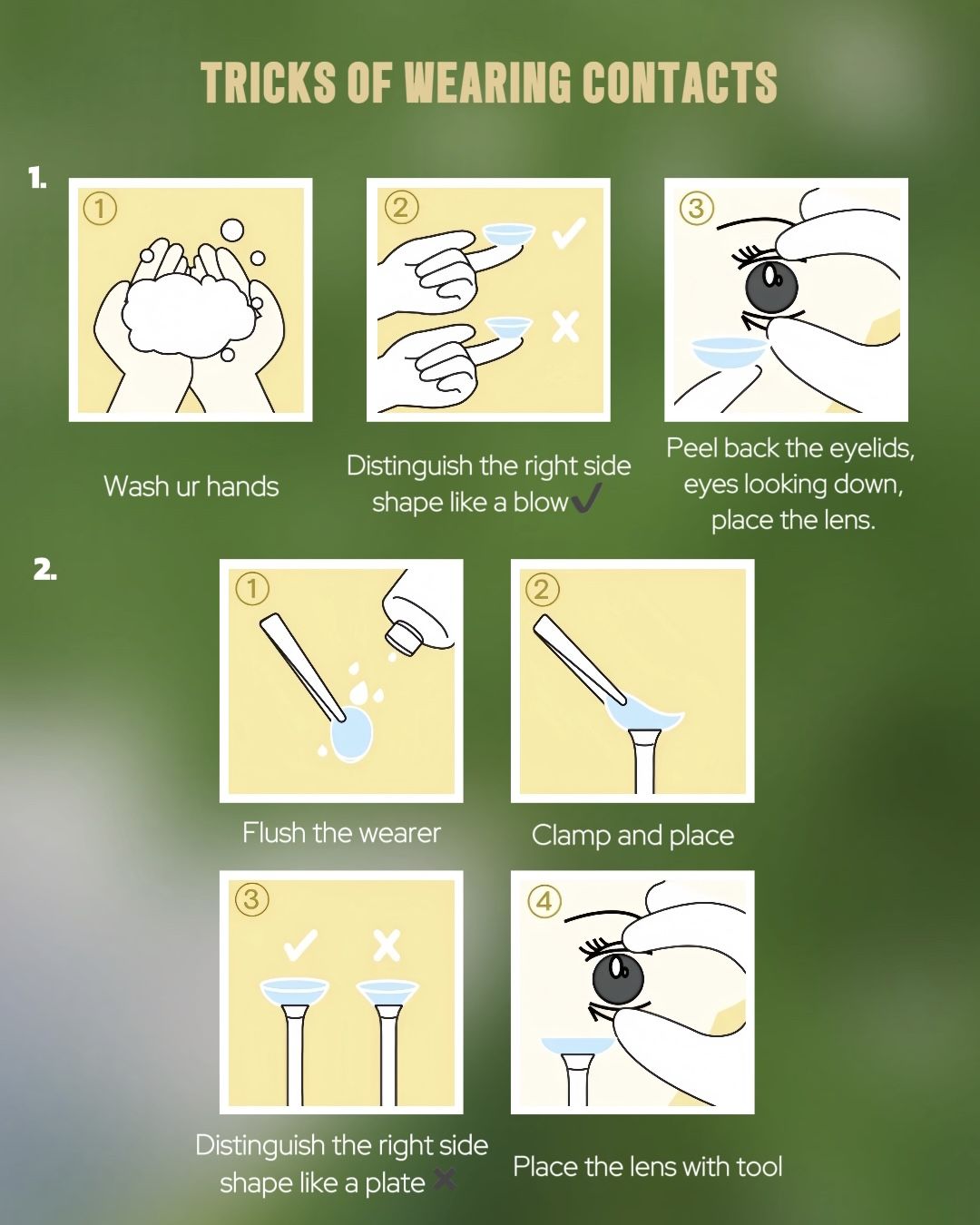
Clean your hands with antibacterial soap and dry them with a lint-free towel. Put the contact on your index finger and check if it looks like a bowl - that's the right side up. Your non-dominant hand should hold your upper eyelid while your dominant hand's middle finger pulls down the lower lid. Look straight ahead or up as you place the lens on the lower part of your eye. The lens will center itself after a few blinks.
How to take care of colored contacts
Remove and clean your lenses right away. Add some solution drops to the lens in your palm and rub each side gently for 15-20 seconds. This helps remove stuck deposits from the lenses. A fresh solution rinse comes next before storage. New lens cases every three months will prevent bacteria from growing.
Contact solution for colored contacts
Your eye doctor's recommended multipurpose solution works best. Tap water and saliva can harbor harmful bacteria, so avoid them completely. A hydrogen peroxide-based system gives deeper cleaning for half-yearly or yearly lenses. Weekly enzyme tablets help remove protein buildup from long-term lenses - many eye care professionals suggest this approach.
How long can you wear them?
Eye care professionals suggest wearing colored contacts between 8-12 hours each day. Daily disposables need to go after one use, while monthly lenses last 30 days once opened. The risk of infection goes up dramatically if you sleep wearing lenses - avoid this unless they're specifically made for overnight use.
Tips for first-time users
Wear your lenses for 4-6 hours initially and increase the time as your eyes get used to them. Put your contacts in before applying makeup and take them out before removing it. Preservative-free artificial tears help keep your eyes moist all day. Your lenses should come out immediately if you notice any discomfort, redness, or irritation - then call your eye doctor.
Conclusion
Colored contact lenses can change your look while keeping your eyes healthy. This piece shows how these innovative devices blend science and style to create subtle changes or dramatic new looks. It also explains that you need proper fitting and a valid prescription for all colored contacts, whether you use them daily, to correct vision, or for cosplay.
Your vision's safety comes first with colored contacts. You must buy FDA-approved lenses from authorized retailers to protect your eyes. Note that sharing lenses or buying from sketchy sources can damage your eyes within hours.
Good maintenance makes a big difference in your colored contacts experience. Clean protocols, right solutions, and proper wear times help keep your eyes healthy and comfortable. New users should take it slow and watch for any eye irritation signs.
Your colored contacts experience can be fun and safe with proper knowledge. These versatile lenses give you many options, from subtle changes to your natural eye color to complete transformations for special events. The secret is to balance creativity with safe practices. Your eyesight matters more than any temporary look.
Advanced colored contact technology brings more natural-looking options and specialized designs. Notwithstanding that, proper fit, care, and professional guidance are the foundations of a great colored contact lens experience.