

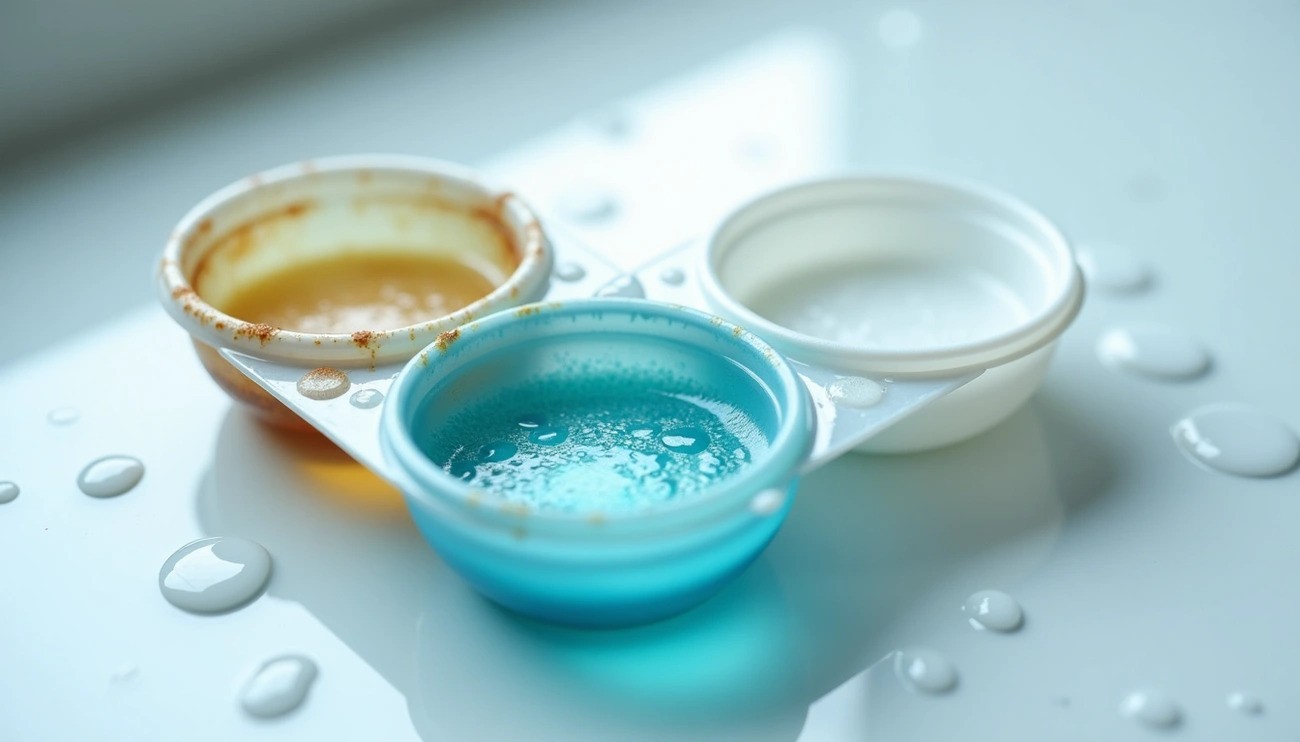
Most people don't realize how often they should replace their contact lens cases. Using the same case too long increases your risk of eye infections and complications by a lot. The CDC recommends getting a new contact lens case every 3 months. Many people keep their cases much longer and expose themselves to contamination without knowing it. Spotting the warning signs for case replacement becomes tough if you don't know what to watch for.
This detailed guide shows you the essentials of contact lens case hygiene and replacement timing. You'll learn how to shield your eyes from hidden dangers that old cases can harbor.
Why Replacing Your Contact Lens Case Matters
Your contact lens case might look harmless, but research tells a startling story: all but one of these studies show that 30% to 85% of contact lens storage cases contain potentially harmful microorganisms. This hidden danger needs your attention because proper contact lens case replacement protects your vision.
Bacteria buildup and biofilm formation
Contact lens cases give bacteria the perfect home. These microbes thrive in the warm, moist environment every time you store your lenses. The bacteria that enter your lens case don't stay free-floating - they build a protective structure called a biofilm.
This biofilm poses several risks:
- It creates a sticky matrix that shelters harmful pathogens
- It becomes harder to disinfect over time
- It makes bacteria by a lot more resistant to antimicrobial agents than free-floating cells
Research has found tens of thousands of bacteria in just a tiny amount of contact solution, even with daily solution changes. These biofilms can develop despite regular cleaning as microscopic organisms build resistance to disinfecting solutions.
How old cases can harm your eyes
Contaminated cases directly affect your eye health. Your lenses sit right on your eye's delicate surface, so any contamination moves harmful microorganisms onto one of your body's most vulnerable areas.
Scientists have found many dangerous organisms in storage cases, including Pseudomonas, Serratia, Staphylococcus, Acanthamoeba, and Fusarium species. These pathogens can cause:
- Conjunctivitis (pink eye) with redness and discomfort
- Keratitis, which threatens your vision through corneal infection
- Corneal ulcers that might permanently damage your eyes
Contact lens users already face higher risks of keratitis or corneal inflammation than non-users. So using an old, contaminated case makes this risk even worse. Studies prove that lens case age increases the chance of contact lens-related corneal infection, and contamination rates jump in cases older than three months.
CDC recommendations on replacement frequency
The Centers for Disease Control and Prevention (CDC) bases its guidance on the largest longitudinal study and recommends replacing your contact lens case every three months. This timeline comes from research showing substantial contamination in cases used beyond this period.
Notwithstanding that, very few people follow these guidelines. Only 5% of contact lens wearers replace their cases every three months, though most solution bottles come with a free case as a built-in reminder.
The age gap between contaminated and clean cases tells an important story. Contaminated cases are usually older, averaging 6 months compared to 5.5 months for clean cases. Cases used beyond nine months show the highest contamination rates, putting your eyes at risk needlessly.
Dr. Woo and other eye care professionals suggest even more frequent changes - every two to four weeks. This shows how medical experts take this issue seriously. This simple change can reduce your risk of sight-threatening infections by a lot.
Hidden Dangers Lurking in Old Lens Cases
Your contact lens case might be the last place you'd expect eye health problems to start. Most people pay attention to keeping their lenses clean, but that small plastic container could harbor dangerous microorganisms. Let's get into what grows in there and how it can harm your vision.
Contact lens case mold and contamination
Your lens case's dark, wet environment makes a perfect breeding ground for microbes. Research shows contact lens cases get moderate to heavy contamination in just two weeks of use. The real problem comes from biofilms – organized communities of bacteria that stick to your case's surface.
You can remove these biofilms easily at first, but they become harder to clean as time passes. Once mature, these biofilms resist antimicrobial agents better than free-floating bacteria. Regular cleaning won't completely disinfect them.
These microorganisms show up in contaminated cases:
- Bacteria: Pseudomonas, Serratia, Staphylococcus species
- Fungi: Fusarium species, Cladosporium (found in 10% of fungal contaminations), Candida (present in 9% of fungal contaminations)
- Protozoans: Acanthamoeba
Most fungi appear with bacterial contaminants, but sometimes fungi were the only microbes found. This shows how case contamination can vary.
How infections start from dirty cases
Infections follow a simple path from case to eye. Microorganisms move from your dirty case to the lens surface when you handle them. These germs then travel straight to your eye's surface when you put in your lenses.
Your risk goes up because of:
- Old cases with tiny scratches where bacteria hide
- Cases that stay wet and help microbes grow
- Adding new solution to old solution instead of starting fresh
- Cleaning or storing cases with tap water (especially risky for Acanthamoeba)
Wiley's study showed that case contamination and biofilm growth can lead straight to contact lens-related microbial keratitis. Bacteria can move into storage cases through your fingers during lens handling, creating an endless contamination cycle.
Real risks: keratitis and corneal ulcers
Dirty cases cause more than just irritation. Contact lens use causes 65% of new microbial keratitis cases in the UK. Similar numbers appear in Holland (63%), Taiwan (53%), US (52%), and Japan (55%).
Microbial keratitis seriously infects your cornea and gets worse faster. Without treatment, bacterial keratitis can make you lose vision or go blind. Acanthamoeba keratitis happens less often but affects contact lens users in more than 90% of cases.
Corneal ulcers create another serious threat. These painful open sores on your cornea come from bacteria or fungi. They need urgent medical care to prevent permanent vision damage. Cleveland Clinic links contaminated cases to deadly eye problems like keratitis that can cause blindness without treatment.
Watch for these infection signs:
- Eye pain or discomfort
- Redness and discharge
- Light sensitivity
- Blurry vision
- Something feels stuck in your eye
You should replace both your lens case and contacts right away if you notice these symptoms. See an eye doctor quickly too.
How Often Should You Replace Your Contact Lens Case?
Contact lens wearers often miss a crucial part of their eye care routine. Studies show that barely 5% of users properly replace their contact lens cases as recommended by medical professionals.
CDC contact lens case replacement every 3 months
The CDC provides clear direction on this matter - you need to replace your contact lens case at least once every three months. Research shows that cases older than three months become substantially contaminated, which explains this specific timeframe.
The American Optometric Association backs this up and suggests getting rid of your contact lens case every one to three months. Several US organizations and an Australian organization recommend quarterly replacements as well.
Research proves these guidelines work. Cases used for less than three months showed no bacterial growth in culture tests. Yet most people don't follow these recommendations. Studies reveal that only 24.5% to 90.2% of users replace their cases within the suggested 1-3 month window.
The numbers get worse. About 2.8% to 20% of users never replace their cases. This creates serious risks since used cases can harbor microbes that cause severe eye infections.
Factors that may require more frequent changes
You might need to replace your case more often than every three months. Your usage patterns play a big role - daily lens wearers should stick firmly to the three-month schedule.
Some manufacturers push for even shorter timelines and suggest replacing cases every one to two months. Many eye care professionals see quarterly replacement as just the minimum standard.
You shouldn't wait for the full three months if your eyes feel irritated or infected. Any eye discomfort means you should throw away both your lenses and case right away.
Signs you need a new contact lens case
The calendar isn't your only guide for case replacement. Look out for these warning signs that tell you it's time for a new case:
- Physical damage: Cracks, warping, or closure problems compromise the case's protective function
- Visible changes: Discoloration or buildup that stays after cleaning
- Persistent odor: Any smell that lingers even after thorough cleaning
You should also get a new case after any eye infection to avoid recontamination. Solution bottles often come with a free case, which makes replacement easy and cost-effective. Switching cases with each new solution bottle helps maintain proper timing - though only 36-42% of users currently do this.
A simple case replacement ended up being one of the best ways to protect your eyes from infections.
Best Practices for Contact Lens Case Hygiene
Proper hygiene protects your eyes between contact lens case replacements. Daily maintenance plays a vital role in preventing eye infections, even when you regularly change your case.
Daily cleaning and drying tips
Your case needs a simple but consistent routine:
- Take out all solution after removing your lenses
- Clean your hands with antibacterial soap and dry them with a lint-free towel
- Use the "rub and rinse" method - put fresh multipurpose solution in the case and clean deposits with your clean fingertip
- Give it another rinse with solution to remove any remaining particles
- Let it air-dry by placing it face down on a clean paper towel
The caps need cleaning too—they collect just as many microorganisms as the wells. Your contact lens case needs daily care right after you take out your lenses.
How to store your case properly
Your storage location makes a big difference in contamination risk. Many people keep their cases in the bathroom, but this is one of the worst spots because high humidity levels help bacteria grow.
Better places to store your case include:
- Cool, dry spaces
- Areas where caps can stay off while drying
- Clean tissue surfaces where it can drain upside down
- Spots away from possible contaminants
After it dries completely, put the caps back on and keep it somewhere safe from moisture and airborne particles.
Avoiding tap water and other common mistakes
Using tap water in your lens care routine can be dangerous. Tap water has microorganisms like Acanthamoeba that might cause serious eye infections or blindness. You should only use sterile solutions made specifically for contact lenses.
Common mistakes to avoid:
- Using soap, hydrogen peroxide, or other non-approved substances
- Skipping daily case cleaning
- Not letting the case dry fully
- Storing the case in humid places
When to replace solution and not reuse
You need to throw out old solution from your case before putting in your lenses. Adding fresh solution to old solution ("topping off") reduces how well it disinfects. Old solution loses its sterility and can harbor bacteria.
Fresh solution must go into your case every time you store your lenses. This simple step can reduce your risk of serious eye infections by a lot. Even the best solution becomes ineffective after use, so treat it as a single-use product to protect your eyes.
What to Do If You Don’t Have a New Case
Sometimes you might not have your contact lens case when you need it. Your eye health should still be the top priority in these situations.
Safe contact lens case substitutes
A new lens case from any pharmacy or supermarket is your safest bet. These cases are usually cheap and available everywhere. Your optometrist's office might even have free cases - a quick call could solve your problem right away.
Temporary storage options
These alternatives can work in real emergencies:
- New, sealed contact lens blister packs (after removing the original lenses)
- Travel-size containers made specifically for contact lens solution
- Small, clean medicine cups that seal properly
Any temporary solution should not be used beyond 24 hours. Use fresh solution and keep your temporary container as clean as possible during this time.
What not to use as a substitute
Never store your lenses in:
- Household containers like drinking cups, food containers, or pill boxes
- Makeshift containers from bathroom items
- Any previously used container that hasn't been sterilized
- Containers without airtight seals
Improvised cases can expose your lenses to contamination and lead to serious eye infections. The best choice is to buy a new case if you don't have one. Your vision health isn't worth the small convenience of using makeshift solutions.
Conclusion
Looking after your contact lens case might seem like a minor detail in your eye care routine. This simple practice substantially reduces your risk of serious infections. We've seen how bacterial biofilms grow in old cases and can lead to conditions like keratitis and corneal ulcers that put your vision at risk.
The CDC recommends replacing your contact lens case every three months. Your eye care professional might suggest you replace it more often - maybe each time you open a new bottle of solution.
Your case needs immediate replacement if you notice signs like discoloration, cracks, or lingering odor. On top of that, it helps to empty your case daily, use fresh solution each time, and let it air dry completely after each use.
Note that all but one of these contact lens wearers don't follow proper case replacement guidelines. This puts most users at needless risk. A small investment in your routine protects something that's irreplaceable—your eyesight.
Your vision deserves excellent care. A few moments spent on proper maintenance and regular replacement of your contact lens case is one of the easiest ways to keep your eyes healthy for years to come.