

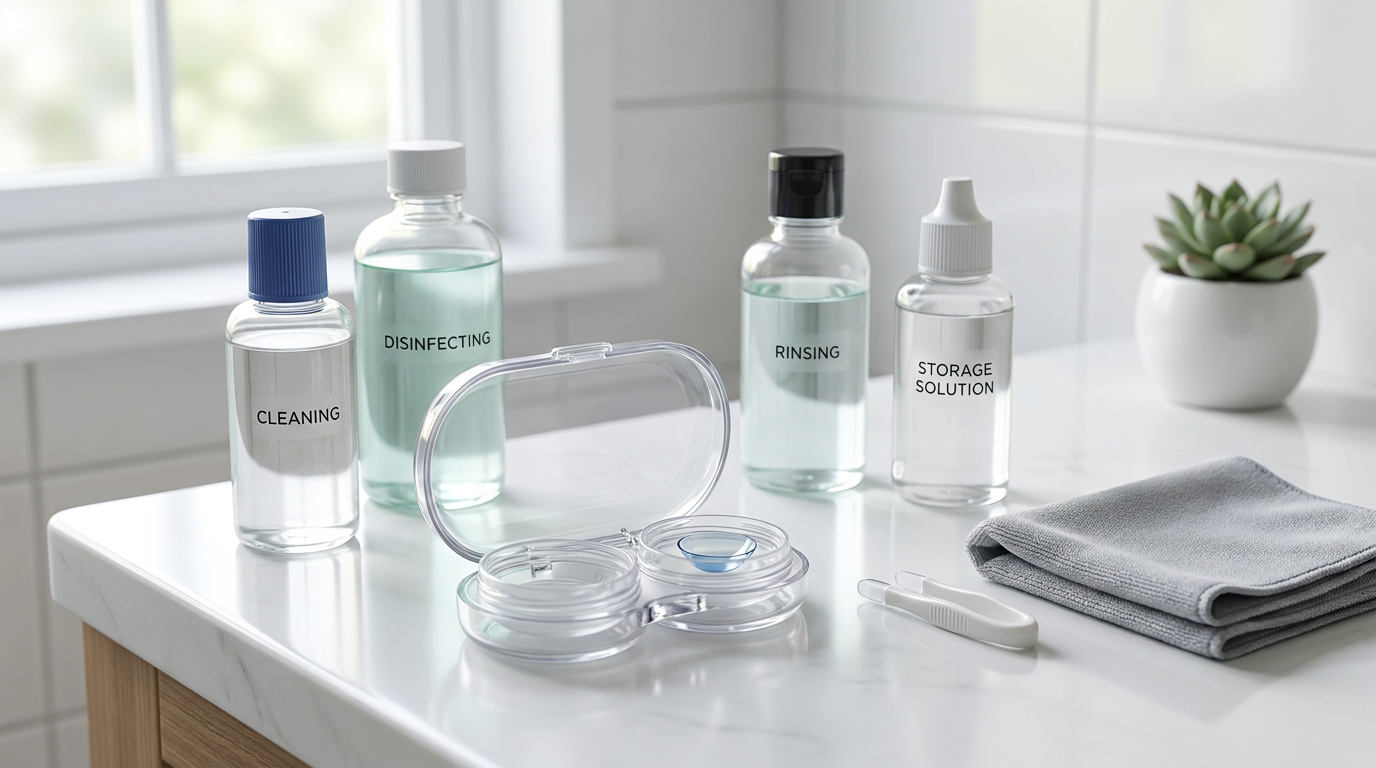
The right RGP contact lens solution can be hard to find for the roughly 11% of contact lens wearers who use rigid gas permeable lenses. You can't grab any multi purpose contact solution off the drugstore shelf like you would with soft contact lenses. The wrong contact lens solution can cause serious complications. Infection risk remains low at just 2 cases per 10,000 patients compared to 25.4 cases for soft lens wearers, though. This piece covers everything you need to know about rigid gas permeable contact lens solution types and how to choose the best solution for contact lenses based on your specific needs.
Understanding RGP Contact Lenses: The Basics
What Is RGP Contact Lenses: Definition and Benefits
Rigid gas permeable contact lenses are corrective lenses made from oxygen-permeable polymers that maintain their shape on your eye. Developed in the late 1970s and refined through the 1980s and 1990s, these lenses marked the most important improvement over earlier hard lenses that blocked oxygen transmission to the cornea. Modern RGP lenses use advanced silicone-based materials that allow oxygen to pass through while maintaining the structural integrity needed for clear vision.
The rigid surface of these lenses creates a smooth optical interface that doesn't flex or dehydrate throughout the day. Tears flow underneath the lens when you blink and form a liquid cushion between the lens and your corneal surface. This tear layer masks surface irregularities and provides a stable refracting surface that delivers sharp optics consistently.
RGP lenses offer several distinct advantages:
- Superior oxygen transmission: The lens material itself is highly permeable, and the smaller diameter allows fresh tears to circulate beneath the lens with each blink
- Sharper visual clarity: The rigid structure maintains a uniform optical surface that doesn't fluctuate like soft lenses, which can dry out and change shape
- Extended lifespan: A single pair can last a year or longer with proper care, making them affordable over time
- Deposit resistance: The non-water-absorbing material repels protein and lipid buildup more effectively than soft lenses
- Custom fabrication: Each lens is manufactured to match your corneal measurements and prescription requirements with precision
Who Should Wear Gas Permeable Contact Lenses
You might be an ideal candidate for RGP lenses if you have moderate to high astigmatism. The rigid lens design compensates for irregular corneal curvature by creating a new refracting surface over your eye. Patients with more than 2.50 diopters of corneal astigmatism often achieve better visual results with RGP lenses compared to toric soft lenses.
Keratoconus patients benefit from gas permeable contact lenses especially. This condition causes the cornea to develop a cone shape, but RGP lenses flatten the cornea and replace its irregular surface with a smooth optical interface. RGP or specialty rigid lenses are the only option that delivers functional vision for people with keratoconus in many cases.
If you have mild to moderate dry eye, you may find RGP lenses more comfortable than soft options. The lens material doesn't absorb moisture from your tear film and allows natural lubrication to persist. People with high prescriptions, presbyopia requiring multifocal correction, or irregular corneas from post-surgical complications often experience sharper vision with RGP lenses.
Research indicates that children fitted with RGP lenses tend to have more stable prescriptions compared to children who wear glasses. This makes gas permeable lenses a viable option for myopia management in younger patients.
RGP vs Soft Contact Lenses: Key Differences
The fundamental difference lies in material composition and flexibility. Soft contact lenses are made from flexible silicone hydrogel that conforms to your eye shape, while RGP lenses maintain their rigid structure. Soft lenses cover your entire cornea and extend onto the sclera, whereas RGP lenses are smaller in diameter and sit within the corneal borders.
Adaptation timelines differ considerably. Soft lenses feel comfortable within minutes or days, but RGP lenses require one to two weeks before achieving full comfort. You'll notice lens awareness at first, especially the edge sensation during blinking. This decreases quickly, and many long-term wearers report that final comfort levels between both lens types are very alike.
RGP lenses provide more stable vision because they don't dehydrate or flex throughout the day. Soft lenses can shift position, rotate, or dry out as hours pass and potentially cause vision fluctuations. The rigid surface also means better durability. You won't tear an RGP lens, and they're easier to clean and disinfect.
One drawback: RGP lenses dislodge from your eye more easily than soft lenses during contact sports or if you rub your eyes aggressively. They also require consistent daily wear to maintain adaptation, making them less suitable for part-time use.
Essential Components of an RGP Lens Care System
Rigid gas permeable (RGP) contact lenses require a care routine that is different from that used for soft contact lenses. Because RGP lenses are made from rigid materials and have a different surface structure, it is important to use solutions specifically designed for RGP lenses rather than choosing products solely based on general contact lens compatibility.
A complete RGP lens care routine typically includes cleaning, disinfection, conditioning, and rinsing. Using each step correctly helps remove deposits, maintain lens performance, and reduce the risk of eye infections.
Cleaning Solutions: Removing Daily Deposits
Daily cleaning is an essential part of RGP lens care. During wear, lenses can collect oils, proteins, cosmetics, dust, and other environmental deposits. These deposits may reduce optical clarity, affect comfort, and make the lens surface less wettable.
RGP-specific cleaning solutions generally contain surfactants that help loosen and remove these accumulated materials. After removing the lenses, apply the recommended amount of cleaner and gently rub both sides of each lens according to the product instructions.
Mechanical cleaning is important because simply soaking a lens may not adequately remove stubborn deposits. Even when a solution is marketed as a no-rub product, always follow its specific directions for cleaning and rinsing.
After cleaning, rinse the lenses thoroughly with an appropriate sterile solution before proceeding to disinfection or storage.
Disinfecting Solutions: Reducing the Risk of Infection
Cleaning and disinfection serve different purposes. Cleaning removes visible and microscopic deposits, while disinfection targets microorganisms that may pose a risk to eye health.
RGP lens disinfection systems generally include either hydrogen peroxide-based systems or multipurpose solutions.
Hydrogen peroxide systems can provide effective disinfection without some of the preservatives found in conventional solutions. They require a specific neutralization period, often several hours, before the lenses are safe to place on the eyes. Never put lenses directly into your eyes while hydrogen peroxide is still active, as unneutralized peroxide can cause intense irritation and discomfort.
Multipurpose solutions are designed to combine several care steps, such as cleaning, disinfecting, rinsing, and storage. The required soaking time varies by product, so always follow the manufacturer's instructions rather than assuming that a shorter soaking period is sufficient.
Choosing the Best Solution for Contact Lenses: Selection Guide
Choosing the right contact lens solution starts with your lens type, eye sensitivity, and daily wearing habits. For rigid gas permeable (RGP) lenses, it is especially important to use products that are compatible with the specific lens material and any surface treatments.
Consider Your Lens Type and Eye Sensitivity
Not every contact lens solution is suitable for every lens. RGP lenses have different material and surface characteristics from soft contact lenses, so they generally require care products specifically labeled for rigid gas permeable lenses.
Your eyes also matter when choosing a solution. If you frequently experience redness, dryness, burning, or stinging, ingredients such as certain preservatives may contribute to discomfort. In these situations, your eye care professional may recommend a preservative-free or sensitive-eye option based on your individual needs.
Do not choose a solution solely because it is marketed for sensitive eyes. Compatibility with your lenses remains essential.
Multipurpose vs. Step-by-Step Care Systems
Multipurpose solutions combine several functions, such as cleaning, disinfecting, rinsing, and storing, into one system. They can simplify daily lens care and may be convenient for people who prefer a straightforward routine.
Separate cleaning and conditioning systems use different products for different stages of lens care. A dedicated daily cleaner can help remove stubborn deposits, followed by a conditioning or disinfecting solution for storage.
A step-by-step system may be useful when your lenses accumulate significant protein, lipid, or environmental deposits, or when your eye care professional specifically recommends a more detailed cleaning routine.
The best choice depends on your lens material and the manufacturer's care instructions rather than convenience alone.
Preservative-Free Options for Sensitive Eyes
Some hydrogen peroxide-based lens care systems are preservative-free after the solution has been fully neutralized. These systems can be an option for people who are sensitive to certain preservatives or who need an alternative to conventional multipurpose solutions.
However, hydrogen peroxide systems require careful handling. The solution must complete its neutralization cycle before the lenses can safely be inserted. Never place lenses directly into the eyes while unneutralized hydrogen peroxide remains on them.
For rinsing, sterile saline supplied in single-use containers can also help reduce the risk of contamination, particularly when a sterile rinse is preferred.
Caring for Coated RGP Lenses
Some RGP lenses feature specialized surface coatings designed to improve wettability, comfort, or resistance to deposits. These coatings may require specific care products to avoid damaging or degrading the lens surface.
Before choosing a cleaner, check whether your lenses have a surface treatment and whether the solution is approved for use with that coating. Avoid abrasive cleaners or aggressive deposit-removal products unless they are specifically recommended for your lenses.
When there is any uncertainty, your optometrist or lens manufacturer can confirm which cleaning and conditioning products are compatible with the lens.
Comparing Affordable and Premium Solutions
Price does not always tell you whether a contact lens solution is appropriate for your eyes or lenses. Lower-cost and premium products may use similar categories of cleaning or disinfecting ingredients, but their formulations, concentrations, preservatives, and compatibility claims can differ.
Rather than choosing based solely on brand reputation or price, compare the following:
- Lens compatibility
- Cleaning and disinfection method
- Preservatives and other ingredients
- Instructions and required soaking time
- Your eye comfort and sensitivity
- Recommendations from your eye care professional
A less expensive solution can be perfectly suitable when it is approved for your specific lenses and works comfortably for your eyes. Conversely, paying more does not guarantee a better result for every wearer.
How to Wear RGP Contact Lenses: Complete Care Routine
Proper maintenance of your RGP lenses starts before you even touch them and continues through a structured daily routine.
Before Insertion: Preparing Your Lenses
Wash your hands with non-moisturizing soap and water before handling your lenses. Moisturizing soaps leave residues that transfer to the lens surface and irritate your eyes. Dry your hands with a lint-free towel to prevent fibers from sticking to your lenses.
Remove each lens from its storage case and inspect for chips, cracks or deposits. Damaged lenses can irritate or scratch your eyes and should be replaced right away. Rinse the lens with saline solution to remove any residual storage solution. Place 1-2 drops of lubricating insertion drops into the back of the lens before insertion to boost original comfort.
Daily Cleaning Technique
Clean your lenses every time you remove them. Place a few drops of RGP cleaning solution on each lens in the palm of your hand. Rub the lens gently with your fingertip in a circular motion for about 20 seconds on each side. This mechanical cleaning removes proteins and lipids that accumulate during wear.
Rinse with saline solution or multipurpose RGP solution after rubbing. Never use tap water to clean or rinse your lenses. Tap water introduces harmful microorganisms that can cause severe infections.
Overnight Storage Best Practices
Store your lenses in a clean case filled with fresh conditioning solution every night. The solution disinfects the lenses and keeps them hydrated. Never reuse old solution or top off your case with fresh solution. This causes contamination and increases infection risk.
Empty your case daily and rinse with sterile solution. Allow it to air dry with the caps off while wearing your lenses. Clean your case weekly by scrubbing it with a dedicated clean toothbrush and saline, then let it air dry.
Weekly Deep Cleaning Methods
Use an enzymatic cleaner or protein remover once a week to break down stubborn protein deposits. These products maintain clear vision and comfortable lens wear by removing buildup that affects lens wettability. Your eye care professional will recommend frequency based on how deposits accumulate on your lenses quickly.
When to Replace Solutions and Cases
Replace your lens case every 1 to 3 months to minimize contamination risk. A new case comes with each bottle of disinfecting solution. Discard opened solution bottles after 28 days, even if solution remains inside.
Troubleshooting RGP Lens Solution Problems
Dealing with Protein Buildup
Protein and lipid deposits accumulate over time. Your lenses feel scratchy or your vision gets blurred. Enzyme cleaners restore the lens surface and break down these stubborn deposits. Buildup that home cleaning doesn't deal very well with can be removed through in-office lens polishing services.
Handling Allergic Reactions to Preservatives
Preservatives in multipurpose solutions can trigger redness, itching and excessive tearing if you're sensitive to them. Hydrogen peroxide-based systems eliminate preservative exposure after neutralization. You can clear up reactions fast when you stop wearing lenses for a while and detox your eyes with preservative-free tears. Atopic patients face five times more contact lens intolerance and require special attention.
What to Do If Solution Causes Discomfort
You experience burning, stinging or pain on insertion? Take out your lenses right away. Rinse the lens with preservative-free saline before you reinsert it. Discomfort that won't go away means you need to switch to a different solution system or lens material. Your eye doctor's guidance is essential here.
Emergency Alternatives and When to See Your Eye Doctor
Tap water, bottled water or sterile saline should never substitute for RGP-specific solutions. Water carries organisms like Acanthamoeba that cause serious corneal infections. A red, painful or suddenly blurry eye after RGP wear requires same-day evaluation. A lens stuck under your upper lid or sudden unexplained vision changes need prompt attention too.
Conclusion
Proper RGP lens care might seem complex at first, but choosing the right contact lens solutions becomes straightforward once you understand your specific needs. Your lens material, eye chemistry and lifestyle determine which products will work best.
Consult your eye care professional about which solution system matches your prescription and any sensitivities you experience. A consistent cleaning routine with RGP-specific products will give you sharper vision and longer lens life.
Note that cutting corners with improper solutions or tap water creates serious infection risks. Quality RGP contact lens solutions and the daily care routine outlined here will give you optimal results and healthy eyes.