

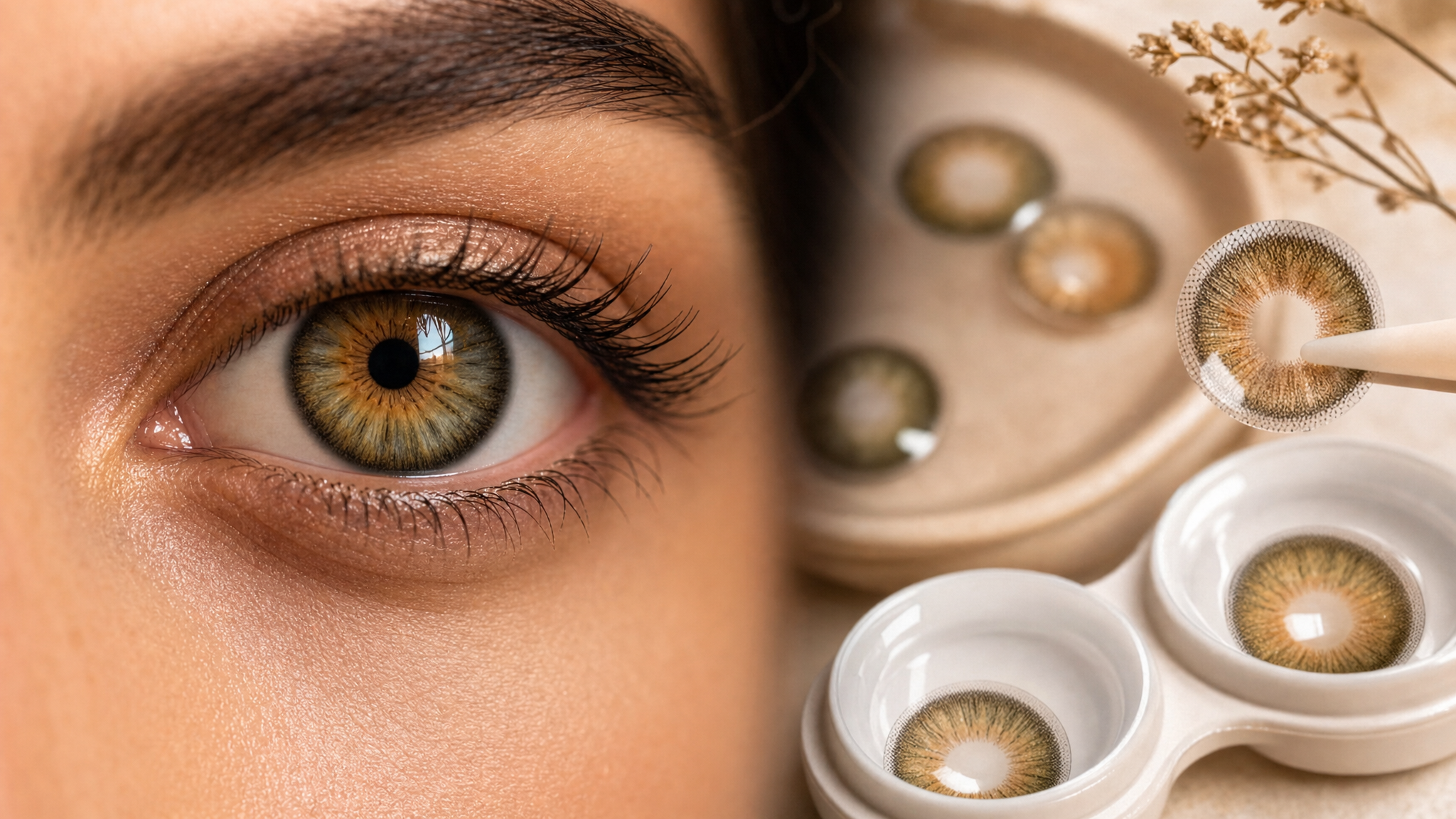
Hazel eyes fascinating facts start with their rarity: only about 5% of people worldwide have this unique eye color. The hazel eye color stands out as a blend of brown, green and gold tones, with no two pairs looking exactly the same. The genetics behind what are hazel eyes remain complex and not entirely understood. This piece explores how rare are hazel eyes across different regions, the science of melanin distribution and practical hazel eye care tips to help you understand and boost your distinctive eye color.
Understanding Hazel Eye Color: More Than Meets the Eye
Hazel eye color is harder to define than you might expect. The color includes a mix of brown, green and gold tones that create a multi-dimensional appearance. Hazel eyes contain varying amounts of melanin distributed unevenly in different parts of the iris, unlike solid eye colors.
What Color Are Hazel Eyes Actually
Hazel eyes feature a moderate amount of melanin—more than green or blue eyes but less than dark brown eyes. This balance creates a blend where brown and green tones merge together, often with golden or amber accents clustered around the pupil. Sometimes another pigment called lipochrome adds a subtle golden or yellow tint to the iris.
The multi-tonal appearance stems from melanin distribution patterns within your iris. You might observe a darker ring that surrounds lighter shades, or notice light brown near the pupil that transitions to charcoal or dark green on the outer iris. This uneven melanin placement makes each pair of hazel eyes individual.
Some hazel eyes lean toward a hazelnut shell color with strong yellowish or russet tones, especially noticeable under sunlight. Others display a mixed brown-green combination that produces a multicolored iris effect. The exact appearance varies widely. Some eyes show all three primary colors while others display only two.
The Four Main Types of Hazel Eyes
Hazel eyes come in four main varieties based on their dominant hues and fleck patterns:
-
Hazel Brown: Brown dominates the iris in this more common variety. They may appear light brown from a distance due to high melanin content, but closer inspection reveals flecks or bands of green. Brown eyes maintain consistent color throughout, while hazel brown eyes contain multiple color variations.
-
Hazel Green: Green serves as the dominant hue in these less common hazel eyes. They showcase intricate blends of green with brown or gold flecks, or gradients that transition between green, brown and gold tones. Pure green eyes display solid green throughout the iris. Hazel green eyes feature mixed colors.
-
Hazel Gray: Some hazel eyes incorporate gray flecks within the color mix.
-
Hazel Blue: Blue flecks can make an appearance in hazel eyes and add another dimension to their color palette.
Why Hazel Eyes Look Different in Different Lighting
Your hazel eyes don't actually change color, but they appear to shift based on environmental factors. This occurs because hazel irises reflect and scatter ambient light differently depending on the lighting source.
Bright sunlight often brings out green tones, while indoor lighting emphasizes brown or honey-colored hues. This happens through a process called Rayleigh scattering, the same phenomenon that makes the sky appear blue. Light rays with shorter wavelengths (blue and green) scatter more easily than longer wavelengths (red) and cause eyes with less melanin to appear green or hazel.
The yellowish-brown pigment lipochrome in your iris, combined with blue light scattering, creates the appearance of green. Sunlight hits your eyes and interacts with varying melanin levels and collagen fibers in the stroma. This causes light absorption and scattering patterns that make your eyes shift in hue. Golden hazel tones emerge when warmer, yellowish pigments get highlighted by natural light and give a radiant glow.
Your clothing color and surroundings also influence how your hazel eyes appear. These factors create an illusion of color change, even though your iris's actual melanin composition remains constant.
The Genetics and Biology of Hazel Eyes
The biological mechanisms behind hazel eye color involve way more complexity than old-school genetics lessons suggested. Eye color inheritance involves up to 16 different genes working together and makes hazel eyes impossible to predict using simple dominant-recessive patterns. This genetic intricacy explains phenomena that often surprise families, such as two brown-eyed parents producing a hazel-eyed child.
How Multiple Genes Determine Hazel Eye Color
The OCA2 and HERC2 genes play major roles in melanin production and control how much pigment your iris contains. Both located on chromosome 15, these two genes work together to create the moderate melanin levels characteristic of hazel eyes. OCA2 influences melanin production and distribution, while HERC2 regulates OCA2 expression.
At least eight other genes contribute to your final eye color beyond these. TYRP1, ASIP, SLC24A4, SLC24A5, SLC45A2, TPCN2, TYR, and IRF4 all function within the melanin pathway and change the total amount of pigment present in your iris. These genes may boost melanin levels to produce brown eyes or reduce total melanin resulting in blue eyes through their combined efforts. Hazel eyes result from a combination of genetic instructions that create moderate melanin levels, different from high melanin concentration in brown eyes and low melanin levels in blue eyes.
The Role of Melanin Distribution in the Iris
Hazel eyes contain a moderate amount of melanin that gets distributed unevenly throughout the iris, with higher concentrations often found in the outer portions. The characteristic color variations and patterns that define hazel eyes genetically come from this uneven distribution. The unique color-shifting quality occurs when this uneven melanin distribution combines with Rayleigh scattering.
Why Two Brown-Eyed Parents Can Have a Hazel-Eyed Child
You inherit two copies of every gene, one from each biological parent. The two copies of the gene differ if someone is heterozygous, for example one for brown and one for lighter pigmentation. Brown-eyed parents can each carry hidden recessive or low-pigment alleles at several genetic locations. That child can inherit a combination reducing iris melanin enough to produce hazel eyes when both parents carry these hidden alleles and pass them to a child.
A brown phenotype can result from carrying one functional brown allele plus a recessive blue or lighter allele at a major location. Two brown-eyed parents can have children with lighter eye colors including hazel if both are heterozygous. Each parent may carry and transmit low-pigment alleles or combinations of modifier alleles that produce hazel eyes in their children, and this explains the outcome.
The Complex Inheritance Pattern of Hazel Eyes
Eye color functions as a polygenic trait, meaning multiple genes working together influence the final result rather than a single gene. Predicting a child's eye color based solely on the parents' eye colors becomes nowhere near straightforward because of this complexity. Two brown-eyed parents may have a hazel-eyed child, while two blue-eyed parents might have a green-eyed child. Each parent carries multiple genes influencing eye color, and the child's final eye color depends on the combination they inherit.
How Common Are Hazel Eyes Around the World? A Guide to Hazel Eyes and Colored Contacts
Hazel eyes are one of the most fascinating eye colors in the world. They are known for their unique blend of green, brown, gold, and amber tones, creating a natural multi-dimensional look that changes under different lighting conditions.
Compared with dominant brown eyes and less common blue or green eyes, hazel eyes are relatively rare. Around 5% of the global population has naturally hazel eyes, making them a popular inspiration for hazel colored contacts among people who want to achieve a warm, natural, and eye-catching transformation.
Whether you have dark brown eyes, light eyes, or simply want to experiment with a new appearance, hazel contacts offer a versatile way to enhance your eye color without making your look feel unnatural.
Hazel Eye Color Around the World
The distribution of hazel eyes varies significantly across different regions. Eye color is influenced by genetics, ancestry, and the amount and distribution of melanin in the iris.
While brown eyes are the most common eye color worldwide, hazel eyes appear more frequently in regions with a long history of genetic diversity and population mixing.
Hazel Eyes in the United States
The United States has one of the higher rates of hazel eyes worldwide, with approximately 18% of Americans having hazel-colored eyes.
This higher frequency is linked to the country's diverse ancestry, including European, Middle Eastern, Latin American, African, and Asian backgrounds. Because of this diversity, many people in the U.S. naturally have intermediate eye colors such as hazel, amber, and green-brown shades.
For those who do not naturally have hazel eyes, hazel contact lenses have become a popular choice for creating this warm, natural eye appearance.
Which Regions Have More Hazel Eyes?
Hazel eyes are commonly found in areas where different eye-color genes have mixed over generations.
Europe
Many European countries have noticeable hazel and intermediate eye colors. Regions where lighter northern European eye colors meet Mediterranean influences often show a wider range of eye shades.
Countries such as France, Germany, and the United Kingdom have many people with intermediate eye colors, including hazel.
This explains why European-inspired hazel contact lenses often feature soft blends of green, brown, and golden tones to recreate a natural European eye appearance.
Middle East and North Africa
Hazel eyes are also relatively common in parts of the Middle East and North Africa, including regions connected to Mediterranean, Arab, Persian, and North African ancestry.
People from these areas often have naturally warm eye colors, making hazel shades especially popular in colored contacts for brown eyes because they create a subtle but noticeable enhancement.
Latin America
Countries such as Brazil and Argentina have diverse populations influenced by European, Indigenous, African, and Middle Eastern ancestry. This mixture contributes to a wider range of eye colors, including hazel.
Because many Latin American users have naturally dark eyes, hazel contacts for brown eyes are designed with stronger pigmentation to create visible color changes while maintaining a realistic appearance.
Hazel Eyes and Ethnicity: Why Can Different People Have Hazel Eyes?
Hazel eyes are not limited to one specific ethnicity. They can appear among people with European, Middle Eastern, Mediterranean, Latin American, and other backgrounds.
Eye color is determined by a combination of genetic factors, especially how melanin is distributed in the iris. Instead of being linked to one ethnic group, hazel eyes appear when certain genetic combinations create a balance between darker brown pigments and lighter green or golden tones.
This unique combination is also why hazel colored contacts come in many different styles, including:
- Natural hazel contacts with soft brown-green transitions
- Green hazel contacts for a brighter appearance
- Golden hazel contacts for warm, amber-like tones
- Hazel contacts for dark eyes with enhanced pigmentation
Why Are Hazel Contacts So Popular?
Hazel eyes have a special visual effect because they can appear different depending on lighting, makeup, clothing colors, and surroundings.
Many people choose hazel contact lenses because they offer:
A Natural Eye Color Upgrade
Unlike dramatic colors such as bright blue or violet, hazel contacts create a subtle transformation. They can make the eyes look warmer, brighter, and more defined while keeping a realistic appearance.
A Great Match for Brown Eyes
Since brown eyes are the most common natural eye color, many customers search for hazel contacts for brown eyes. Modern colored lenses use layered patterns and multi-tone designs to help hazel shades show up beautifully on darker irises.
A Versatile Style Choice
Hazel lenses work well for everyday makeup, cosplay, photography, special events, and fashion looks. Their combination of brown, green, and gold tones makes them suitable for many skin tones and personal styles.
Choosing the Right Hazel Colored Contacts for Your Eyes
Your natural eye color plays an important role in how hazel contacts will look.
For Light Eyes
People with blue, gray, or green eyes usually have more flexibility. Soft hazel lenses can add warmth and depth while maintaining a natural effect.
For Brown Eyes
Dark brown eyes may need lenses with higher color coverage. Look for hazel contacts designed specifically for dark eyes, featuring layered pigments and defined patterns.
For Dark Brown Eyes
Deep brown eyes often look best with hazel lenses that combine golden, caramel, and green tones to create a noticeable transformation.
Fascinating Hazel Eyes Facts That Surprise Most People
Beyond their global distribution patterns, hazel eyes possess distinctive features that set them apart from other eye colors. Many hazel eyes display a sunburst pattern that creates one of their most recognizable characteristics.
The Burst-Like Pattern in Hazel Eyes
Melanin concentration differences between the inner and outer iris create the starburst pattern in hazel eyes, producing radiating lines of color that extend from the pupil outward. Your iris's physical structure improves this effect. It has tiny muscles controlling pupil dilation, collagen fibers creating depth and texture, and multiple layers allowing light to reflect and refract at different angles. Golden or amber rings near the pupil transition into green or light brown outer rings, with flecks that sparkle in different light.
Hazel Eyes and the Chameleon Effect
Scientists call hazel eyes "the eye color of a chameleon". The apparent color change functions as an optical illusion. Different lighting conditions interact with your iris structure and cause this effect. Clothing colors and makeup create contrast effects that make certain tones more prominent. This explains why people report their eyes looking different depending on what they wear. Your pupils dilate due to emotional state, and this can alter how the colors appear.
Cultural Beliefs and Superstitions About Hazel Eyes
Hazel eyes have been associated with mysticism and spiritual abilities throughout history. European folklore called them "witch's eyes." People believed they granted the power to see into both physical and spiritual realms. Ancient cultures believed that people with hazel eyes possessed special powers, such as knowing how to ward off evil spirits. Celtic mythology considered hazel a sacred tree. People with hazel eyes were thought to have a special connection to nature and the power to foresee. Contemporary culture associates hazel eyes with creativity, empathy and adaptability.
Famous Celebrities with Hazel Eyes
Notable personalities with hazel eyes include Angelina Jolie, Rihanna, Kelly Clarkson, Tyra Banks, Ben Affleck, David Beckham, Lady Gaga, Zendaya, Kristen Stewart and Demi Moore. These celebrities demonstrate the diverse range of hazel eye variations, from green-dominant to brown-dominant shades.
Hazel Eyes in Art and Literature
Art and literature have celebrated hazel eyes, which symbolize mystery and depth. Some historians believe Leonardo da Vinci depicted the Mona Lisa with hazel eyes. Authors use hazel eyes to describe characters with depth, mystery and allure, making them memorable and intriguing.
Practical Guide to Hazel Eyes: Care and Enhancement
Your moderate melanin levels place you in a specific health risk category. People with hazel eyes face a 24% higher risk of squamous cell carcinoma compared to those with dark eyes. Light-colored irises, including hazel, also show increased susceptibility to uveal melanoma, a rare cancer affecting five to six of every one million adults each year. Hazel eyes provide more UV protection than blue eyes but give you less defense than dark brown eyes. You may experience increased light sensitivity because your irises block less light from entering your eyes.
What Do Hazel Eyes Say About Your Health
Hazel eye color itself doesn't indicate specific health problems, but changes in appearance warrant attention. Watch for sudden darkening, lightening, spots, patches, or asymmetry between eyes. These changes could signal conditions like cataracts, glaucoma, or Horner syndrome, especially if accompanied by other symptoms.
Best Eyeshadow and Eyeliner for Hazel Eyes
Purple eyeshadow creates contrast that makes golden tones pop, while gold and bronze improve warmth. Green shades bring forward natural green flecks, and blue tones highlight honey hues. Brown eyeshadow complements your brown tones to create soft or smokey looks. Burgundy and plum eyeliner bring out green elements, while bronze and copper emphasize golden-brown warmth.
How to Choose the Right Contact Lenses for Hazel Eyes
Enhancement tints work if you have light eyes and want subtle hazel tones, while opaque tints mask darker eyes. You'll need a contact lens prescription whatever your vision correction needs.
Eye Care Tips Specific to Hazel-Eyed People
Wear sunglasses that provide 100% UV protection to reduce cancer and cataract risks. Schedule detailed eye exams each year. Follow the 20-20-20 rule: every 20 minutes, look at something 20 feet away for 20 seconds. Maintain proper eye hygiene by removing makeup before bed and avoiding shared cosmetics.
Conclusion
Hazel eyes stand out as one of nature's most captivating features. Only 5% of the global population shares this unique trait, which means your multi-tonal irises deserve both understanding and proper care. The complex genetics behind hazel eyes involve multiple genes working together and create endless variations that make each pair truly individual.
Take advantage of the practical tips covered here. Protect your eyes from UV damage with quality sunglasses and schedule regular eye exams. Complementary makeup choices can bring out your natural colors. Your hazel eyes are rare and beautiful, so treat them that way.