

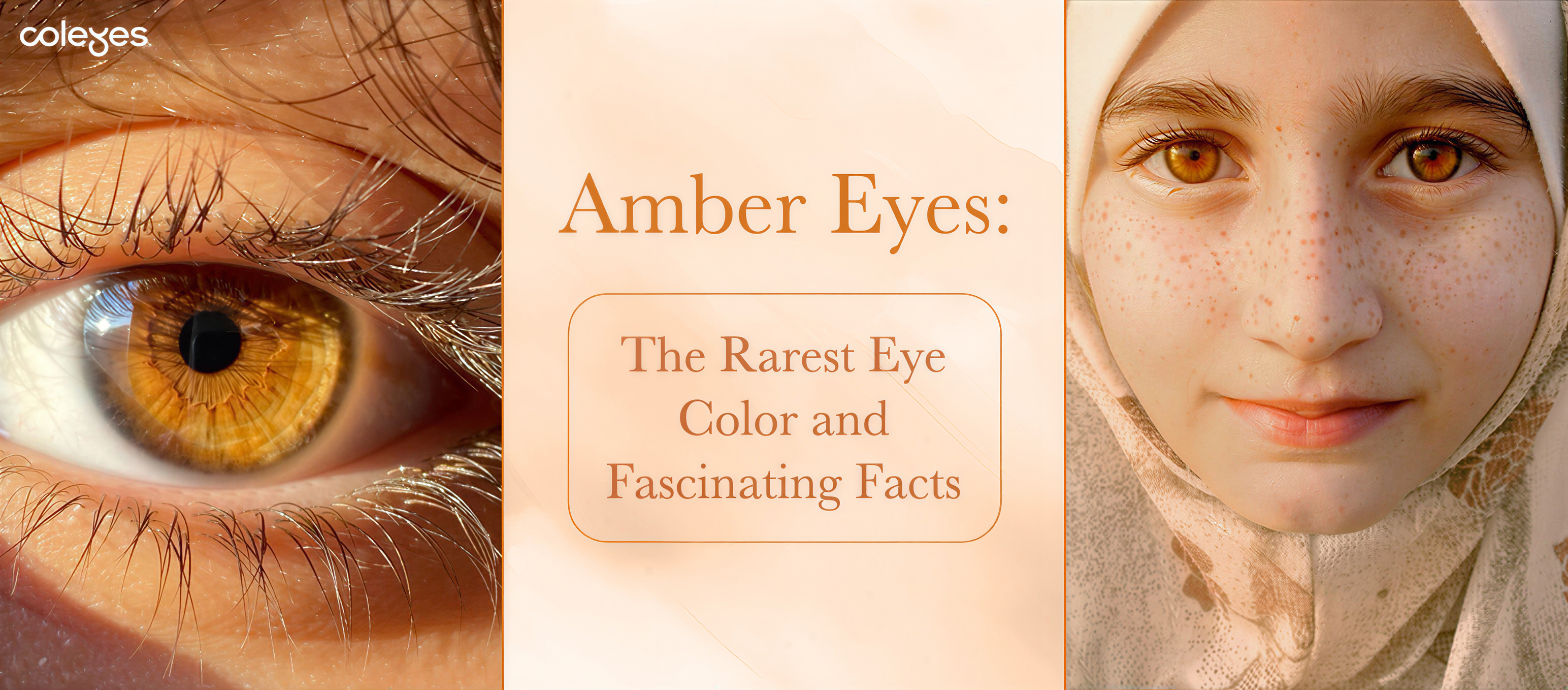
Amber lenses let you try one of the world's rarest eye colors, which occurs naturally in only about 5% of people worldwide. This golden, copper-toned shade is rarer than hazel or blue eyes and has a striking, almost otherworldly appeal. Warm honey contact lenses and deeper amber color contact lenses can create this look, whatever your natural eye color. This piece explains how to choose and style amber eye contact lenses while keeping your new amber-colored eyes looking stunning and healthy.
What Do Natural Amber Eyes Look Like?
Picture a gemstone held up to sunlight, and you’ll get a good sense of what makes this iris color different from every other shade on the spectrum.
The golden, honey and copper tones of amber colored eyes
Amber eyes have a warm, solid color that ranges from pale honey to deep burnt copper, with golden and tawny shades in between. Pheomelanin, also called lipochrome, creates this color. It appears in high concentrations in the iris stroma, while eumelanin, the dark brown-black pigment, remains low. Because of their appearance, amber eyes are sometimes called "golden eyes" when they lean more yellow. People may also describe them as having a "wolf eyes" quality because wolves, domestic cats, and owls share a similar pigment balance. Blue and green eyes rely on light scattering within the iris, but amber eyes get their warmth from the pigment itself. Strong sunlight can give them a glowing, almost metallic appearance.
Amber vs. hazel and light brown eyes
People often group amber eyes with hazel or light brown eyes, but the differences are easy to notice once you know what to look for. Hazel eyes combine green and brown tones, often with visible flecks and color variation throughout the iris. Amber eyes contain no green and appear as one even shade instead. Light brown eyes are mostly brown with occasional warm reflections, while amber eyes appear more golden-yellow or copper overall.
The pigment ratio explains the difference. Amber eyes contain more pheomelanin than eumelanin compared with brown eyes, which keeps their color lighter and warmer. Both colors use the same two pigments, but the ratio between them separates amber from brown.
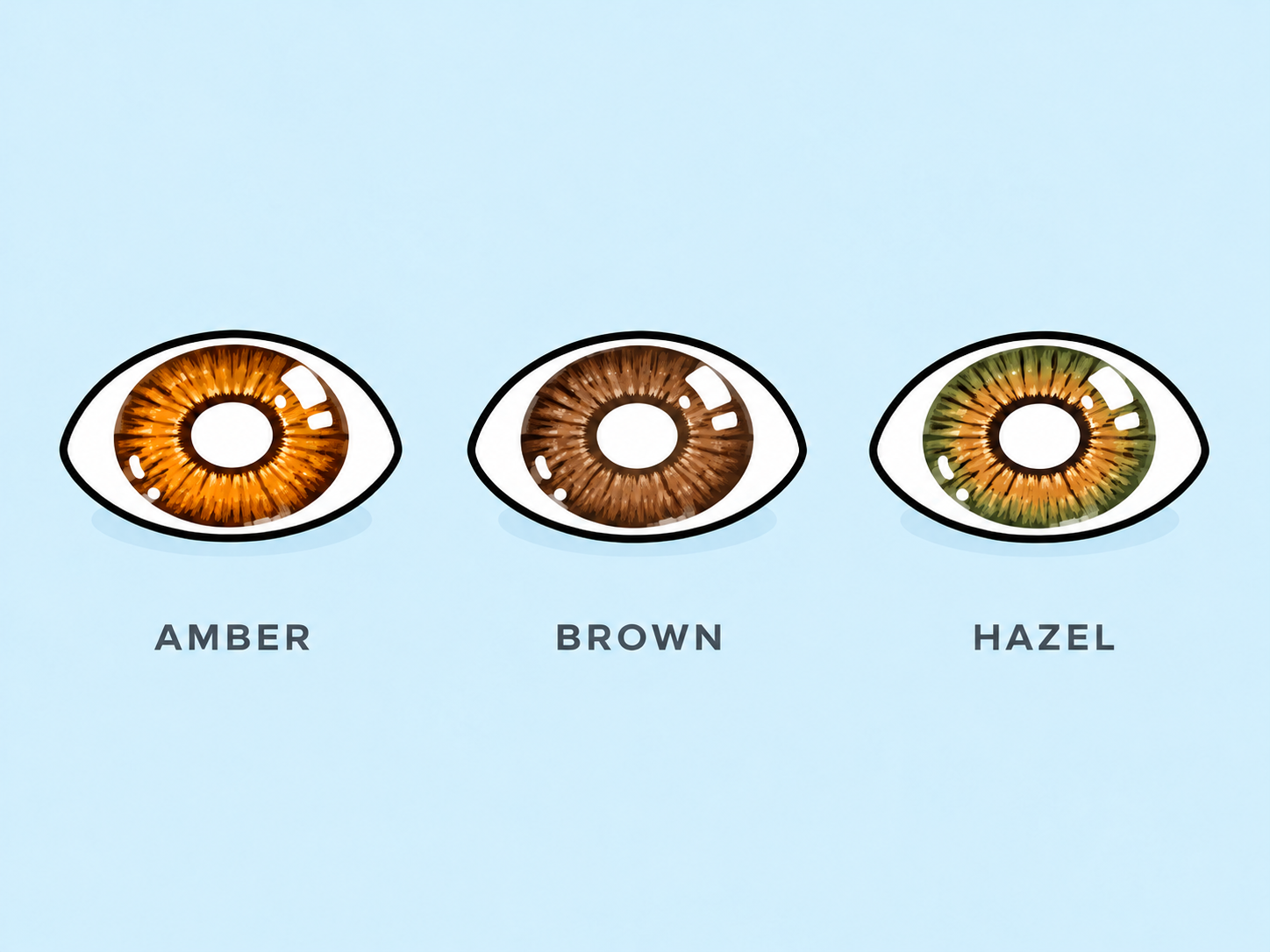
Rarity adds to the comparison. Brown eyes appear in more than 55% of the global population, while blue eyes occur in roughly 8 to 10% and green eyes in about 2%. Hazel and amber eyes each occur in around 5% of people, so both are uncommon. Amber's solid, uninterrupted color still looks distinct from hazel's speckled, multi-toned appearance.
Why lighting changes how eye color looks
Your iris pigmentation does not change from day to day, although your eyes may look brighter, darker, or slightly different depending on where you are. Bright sunlight often brings out amber's golden tones, while dim rooms or shade can make it look like a deeper copper. Pupil size also matters. Pupils expand in low light and contract in bright conditions, changing how much of the iris is visible and altering the color you notice.
Nearby colors can affect the look of your eyes too. Clothing and makeup around your face may bring out tones already present in the iris. Camera exposure, flash, and screen settings add another variable, so keep that in mind when comparing photos of amber contact lenses online.
Amber eyes usually retain their golden or copper character under different lighting conditions. Hazel eyes can change more noticeably between green and brown depending on the light source. This consistency makes amber an appealing choice for colored contact lenses because the shade appears warm and solid instead of changing unpredictably under different lighting setups.
Amber Contact Lens Shades and Styles
The amber family includes several distinct shades, and the right choice can make your final look feel subtle or dramatic.
Golden amber contact lenses for a brighter look
Golden amber lenses sit at the brightest end of this color family. They often combine orange, yellow, and golden-brown tones in one design. Many styles feature a more pronounced limbal ring around the iris that deepens the color and makes the eyes appear larger. Gold-toned lenses can look different based on your natural eye color. Stronger yellow pigment creates a warm amber or honey-gold effect on brown eyes, while the same lens can give green eyes a fantasy-inspired finish that lets some natural green show through lighter designs. Softer gold lenses often look amber on blue or gray eyes, while brighter yellow styles create a bolder effect. Soft lenses cannot achieve true metallic gold, so brands use printed amber, honey, or yellow pigments to recreate that bright, sunlit look.
Honey contact lenses for a softer look
Honey shades fall between light brown, amber, and golden hazel. They provide a softer option than the boldest golden lenses. One-tone designs with honeycomb details, such as Toasted Honey, can flatter almost any eye color and add a warm golden glow. Feathered edges and faded inner rings create a more subtle color change that resembles a natural iris instead of an obvious lens. Light brown honey tones, such as Honey Glaze, soften the stare and brighten the eyes without creating a dramatic change, although results depend on your natural eye color. Honey lenses can brighten dark eyes, soften lighter ones, and create a warmer finish than gray or blue shades.
Copper shades for a deeper look
Copper and deeper amber shades need more pigment to show clearly, especially when you have dark brown eyes. Richer tint coverage helps the golden-copper tone appear at all. These deeper options match the natural amber and honey lens families sold under names such as Amber Natural lenses. They create a denser, richer finish than brighter golden styles. Deeper natural eye colors need more pigment in a copper-leaning lens to produce a visible and consistent result.
Natural iris patterns vs. bold costume designs
Natural honey and amber lenses mimic real iris texture with layered tones that prevent a flat, painted appearance. Costume-focused options take the opposite approach. Honey UV lenses glow under blacklight for nightclub or Halloween wear, while solar honey cosplay lenses use a darker honey motif over the lens with a clear pupil window to match specific characters. Gold and yellow lenses also suit costume looks, including slit-pupil cat designs and bold yellow finishes for vampire, werewolf, or anime-inspired styles. Your intended look determines the best option. Natural designs blend with your features, while bold costume lenses stand out under stage or event lighting.
How to Choose Amber Lenses for Your Eye Color
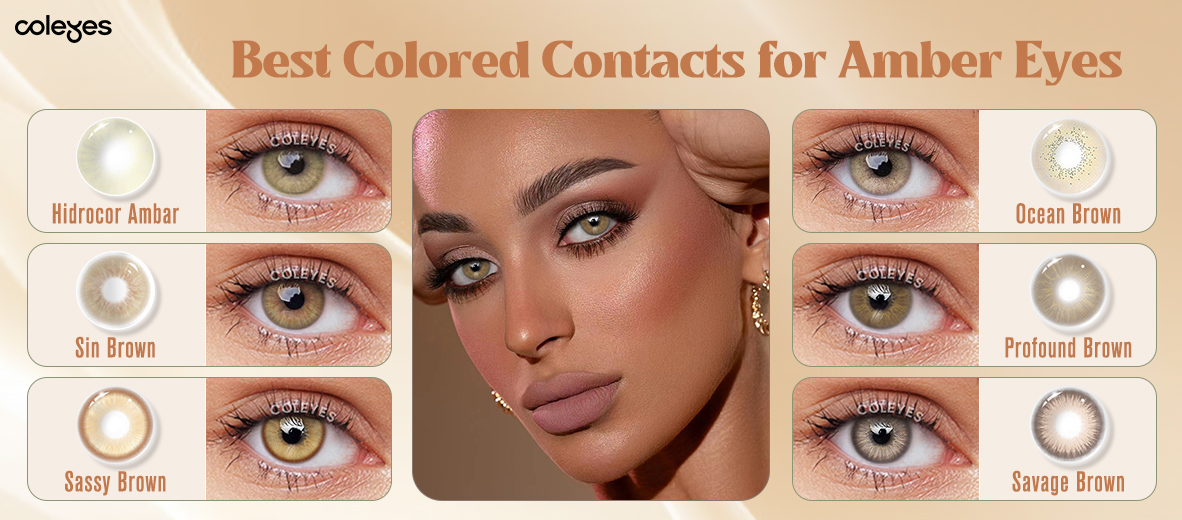
Your natural eye color plays an important role in how amber contact lenses will look on you. Before choosing a pair, consider your iris color, the level of coverage you need, and the overall effect you want to achieve. At Coleyes, exploring different amber shades and lens designs can help you find a look that complements your natural features.
Opaque Amber Lenses for Dark Brown Eyes
Dark brown eyes contain more pigment, which can make translucent colored contacts less noticeable. If you want to transform dark irises into a warm amber or honey shade, look for opaque or semi-opaque amber contact lenses designed to provide stronger color coverage.
The lens pattern also affects the final result. Multi-tone designs combine different shades to create depth and dimension, helping the color appear more natural rather than flat. Honey amber and golden brown tones can add warmth, while deeper amber shades create a richer, more dramatic appearance.
Your skin undertone can also help guide your choice. Golden and honey shades often complement warm undertones, while rich amber and caramel brown can create a beautiful contrast against deeper complexions. When browsing amber contacts at Coleyes, consider both the lens color and its coverage level to find a style that suits your desired look.
Blending Tints for Light-Colored Eyes
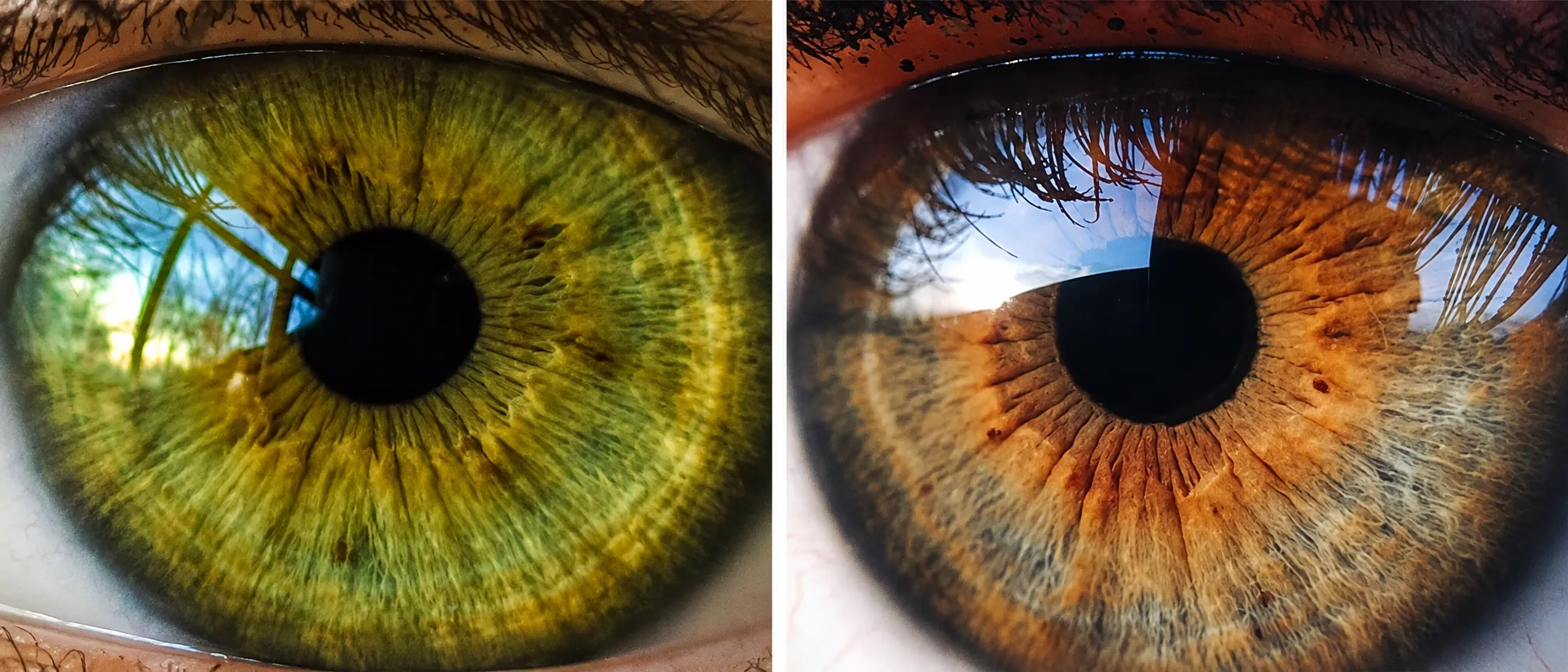
Blue, gray, and light green eyes offer a different starting point because their natural colors can show through translucent lenses. Enhancement tints are designed to intensify or subtly shift your existing eye color rather than completely conceal it. If you prefer a soft transition from your natural shade to golden amber, a blending tint may be a suitable option.
For a more noticeable transformation, opaque amber contact lenses provide greater coverage. Depending on the lens design and pigment pattern, they can make light eyes appear honey-gold, warm hazel, or deep amber brown.
The printed color pattern and central pupil opening also influence the finished look. Some designs feature a gradual blend between the outer iris and the central area, while others create a more uniform color effect. Compare different designs at Coleyes and consider whether you prefer a subtle enhancement or a more striking change.
How Limbal Rings and Pupil Openings Affect Your Look
The limbal ring is the darker outline around the iris. Its appearance can significantly influence how defined or natural your amber contact lenses look. The Natural Colors collection is one place to compare natural-looking color styles.
-
No visible limbal ring: Creates a softer transition between the colored lens and the surrounding iris, making the overall effect appear more subtle.
-
A subtle limbal ring: Adds gentle definition while maintaining a natural-looking appearance.
-
A pronounced limbal ring: Creates stronger contrast around the iris and can make the eyes appear more defined.
-
A contrasting limbal ring: Combines an outer ring with a different shade from the central iris color for a more dramatic finish.
The pupil opening is another important consideration. Colored contacts typically feature a transparent central area that allows light to reach the pupil. Its size and placement affect how much of your natural iris color remains visible near the center.
Learn more about how the limbal ring affects eye appearance. Lens graphic diameter also influences the overall effect. Designs with a larger printed area may create a more noticeable, enlarged-eye appearance, while smaller or more subtle patterns can produce a softer result. Choose a design that matches your preferred aesthetic, and always ensure that the lens fits properly and does not obstruct your vision.
Set Realistic Expectations with Unfiltered Photos
Amber contact lenses can look different under studio lighting, direct sunlight, and ordinary indoor conditions. Bright lighting and camera processing may make golden tones appear more vivid, while softer natural light can reveal subtler honey and brown undertones.
Before purchasing, look for unfiltered photos taken in natural daylight. Images showing the same lenses on different natural eye colors are particularly useful because they demonstrate how the underlying iris can affect the final result.
Before-and-after photos can also help you compare the original eye color with the finished look. Pay attention to the lens's opacity, color pattern, limbal ring, and overall coverage rather than judging it by shade names alone.
At Coleyes, comparing amber contact lens designs alongside your natural eye color can help you narrow down your options. You can also explore These lenses when reviewing available contact lens options. Remember that the final appearance varies with individual eye color, lighting, and lens design. For the best combination of appearance and comfort, choose properly fitted contact lenses and follow the recommended cleaning, wearing, and replacement instructions.
How to Style Your New Amber Eye Look
Once your amber contact lenses are in, your makeup and wardrobe choices determine whether the look feels subtle or stands out.
Makeup shades that bring out warm tones
Gold, bronze, and copper eyeshadow reflect the golden-yellow or copper tones in amber contact lenses. These shades add warmth without competing with the color. Deep plum and violet offer a bolder choice. They sit opposite amber's golden-orange tones on the color wheel, so plum blended through the crease and outer corner creates contrast that makes the iris appear warmer and more golden.
Warm aubergine has red undertones, so it often suits warm-undertone skin better than cool blue-violet shades. Cool blue-violet can look harsh against amber's warm base. Emerald green or deep purple shadow adds drama without requiring a full smoky eye and can make light amber colored eyes look even more captivating.
Clothing and glasses that add contrast
Earth tones and jewel shades, such as greens, browns, sapphire blue, and amethyst purple, bring out amber eyes' warmth. Pastels can soften the effect rather than emphasize it. The same principle applies to eyewear. Deep emerald green, royal blue, and charcoal gray frames create a cool backdrop that helps amber contact lenses stand out. Warm metallic or mahogany acetate frames create a more harmonious, monochromatic look instead.
Classic black frames make amber eyes pop and remain an easy choice. Purple frames provide a bolder alternative because purple and yellow are complementary colors. Warm brown frames, including caramel, cocoa, tobacco, rust, and tortoiseshell, blend with amber color contact lenses' gold tones. This makes the shade appear deeper and more consistent. Navy, cobalt, or plum frames create contrast that sharpens amber's copper tones instead.
Choose frame shapes that contrast with your face shape. Square or rectangular frames balance rounder features, while oval or round frames soften angular ones. Copper-brown, gold, and other metallic frames also complement this rarer eye color.
How to Buy and Wear Amber Contact Lenses Safely
The right color matters, but your eye health matters more when you wear lenses. A few smart buying and care habits can separate a fun new look from a visit to the eye doctor.
Get a contact lens exam and fitting, even if you do not need vision correction
U.S. law classifies amber contact lenses as medical devices, so you need a contact lens exam and fitting from an eye doctor even if you have 20/20 vision. During the visit, your doctor checks your eye health, measures your eyes' curvature and diameter, and confirms that the lenses move and fit properly before issuing a prescription.
Choose a trusted seller that checks prescriptions where required
Buy amber color contact lenses from a seller that verifies your prescription instead of one that ships lenses without checking it. Sellers that skip this step may not be licensed sources. Choose FDA-approved lenses from reputable retailers to reduce the risk of counterfeit or unsafe products.
Compare daily and reusable lenses for your routine
You wear daily disposable lenses once and throw them away, so they do not need solution or a case. Reusable monthly lenses need cleaning and storage every night for up to 30 days. Daily lenses often work well for first-time wearers or people with dry eyes. Monthly lenses may cost less over time, but they require consistent care.
Wash and dry your hands before putting lenses in or taking them out
Wash your hands with soap and dry them with a lint-free towel before touching your lenses. Moisturizing soaps can leave a film that clouds the lens.
Clean reusable lenses as directed and avoid water, sleep and sharing
Use fresh solution to rub and rinse reusable lenses every time. Do not top off old solution, and keep tap water away from your lenses. Avoid sleeping in your lenses, and remove them before showering or swimming. Never share lenses with anyone else.
Remove lenses and seek eye care for pain, redness or blurred vision
Remove your lenses right away and call your eye doctor if your eyes become red or painful, feel sensitive to light, or your vision blurs. These symptoms can signal keratitis.
Conclusion
Amber eyes stand out because few people are born with this golden, copper-toned shade. Contact lenses can help you achieve this rare look safely and convincingly. The right shade, from golden and honey to deep copper, depends on your natural eye color, skin undertone, and the effect you want. Warm makeup tones and contrasting frames can complete the look. Safety matters most: get a proper fitting, buy lenses from trusted sellers, and follow cleaning instructions closely so your new eye color never puts your vision at risk.