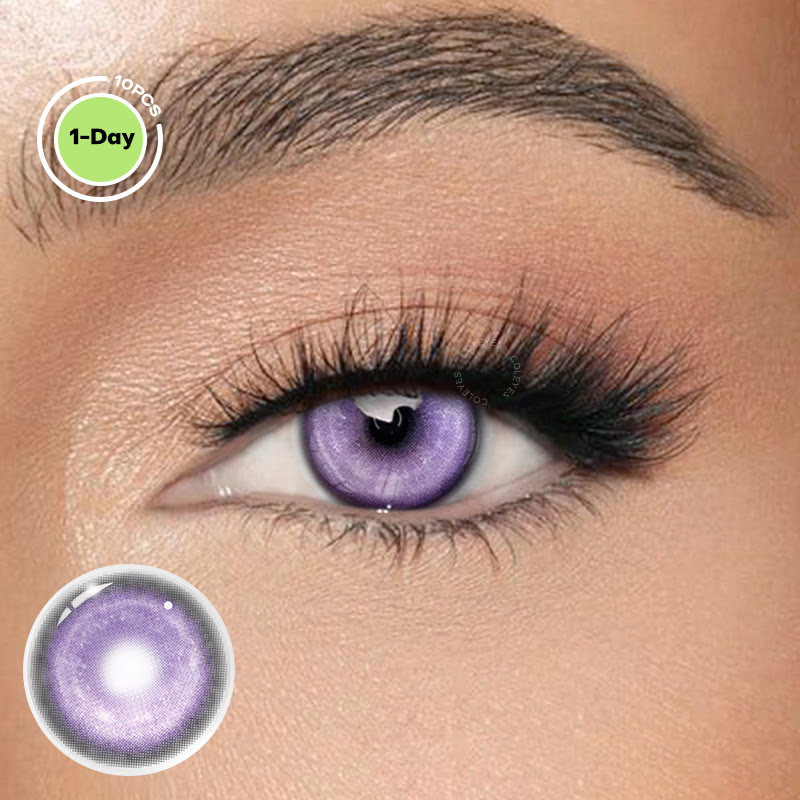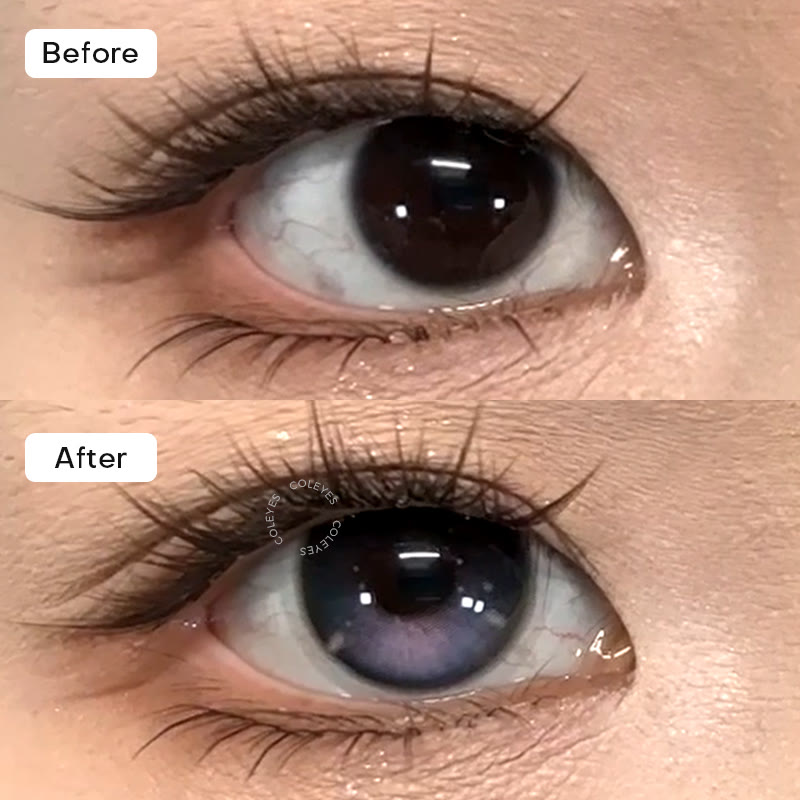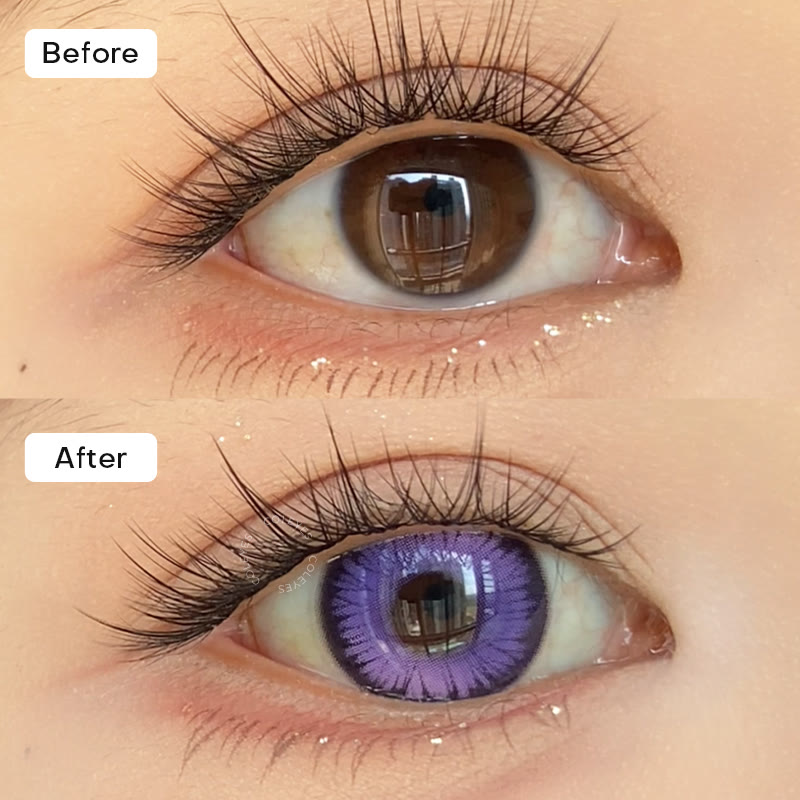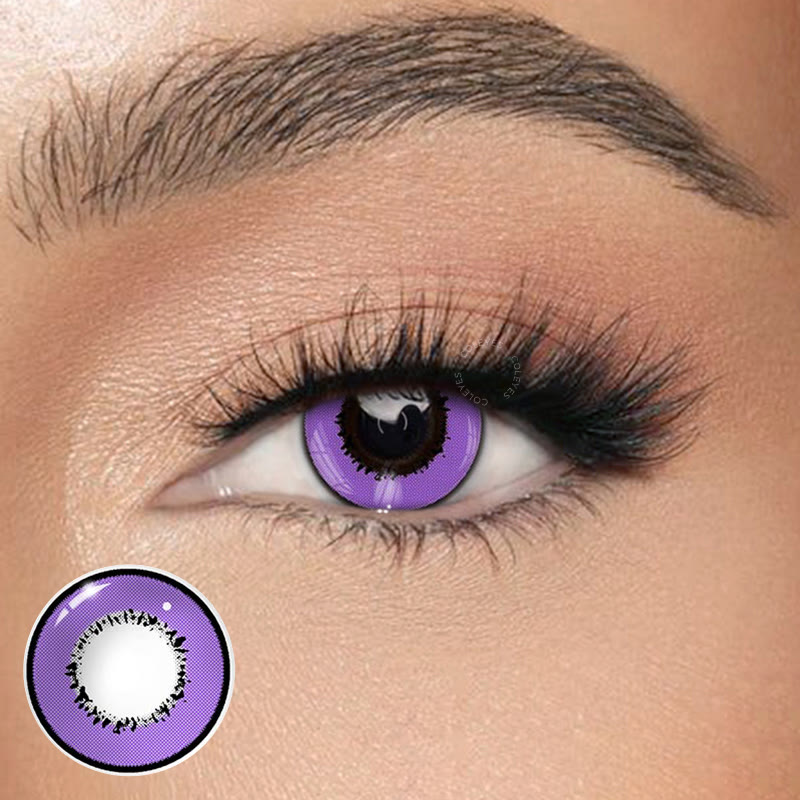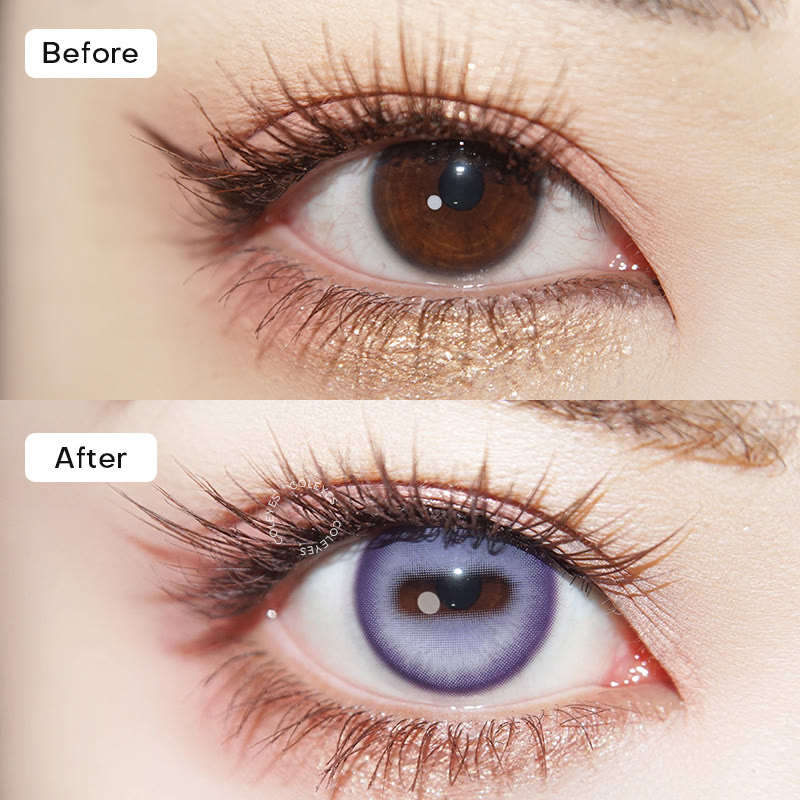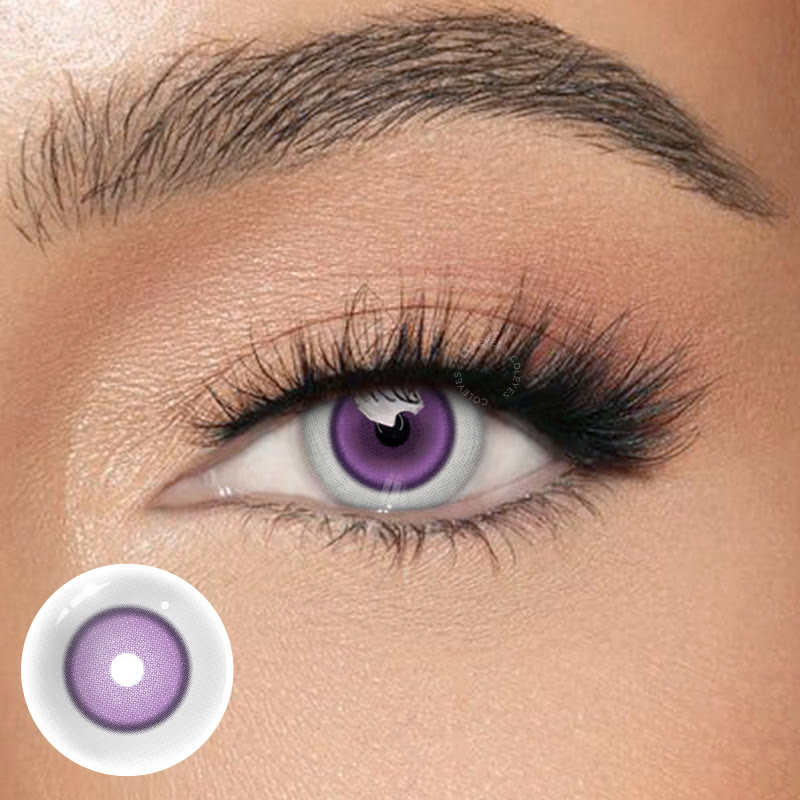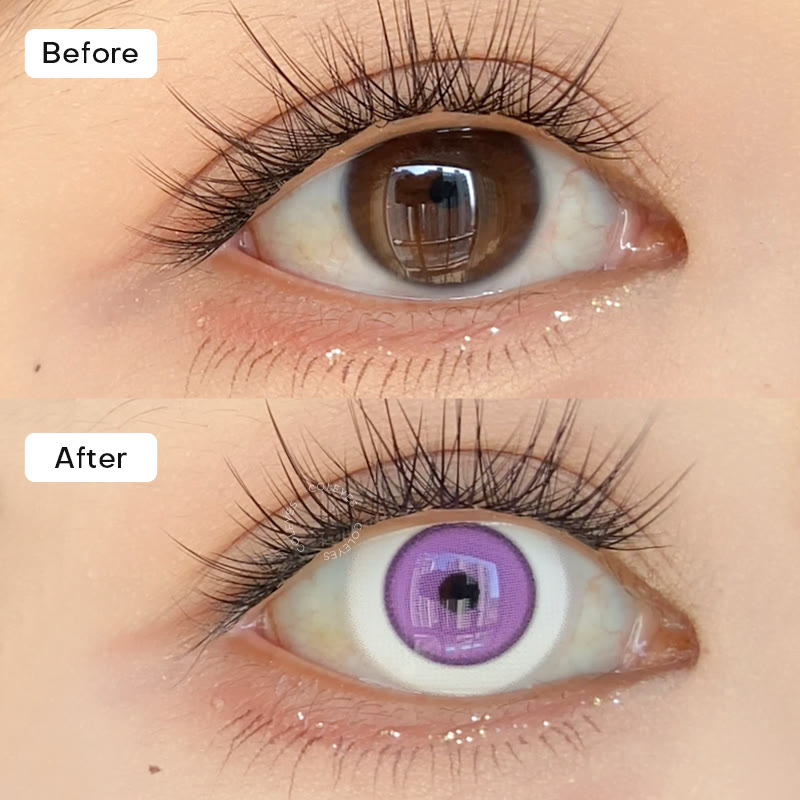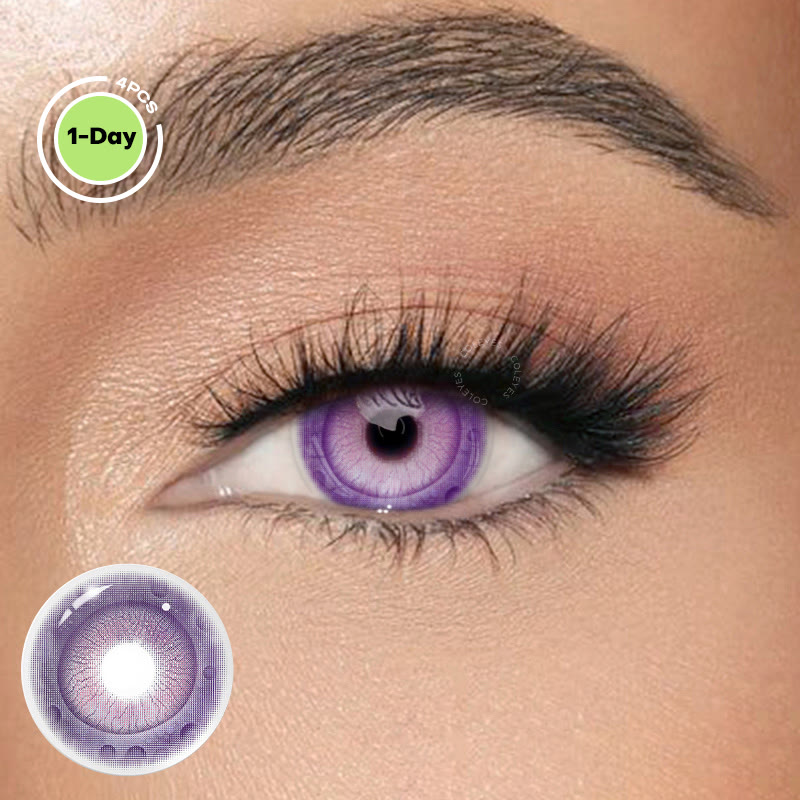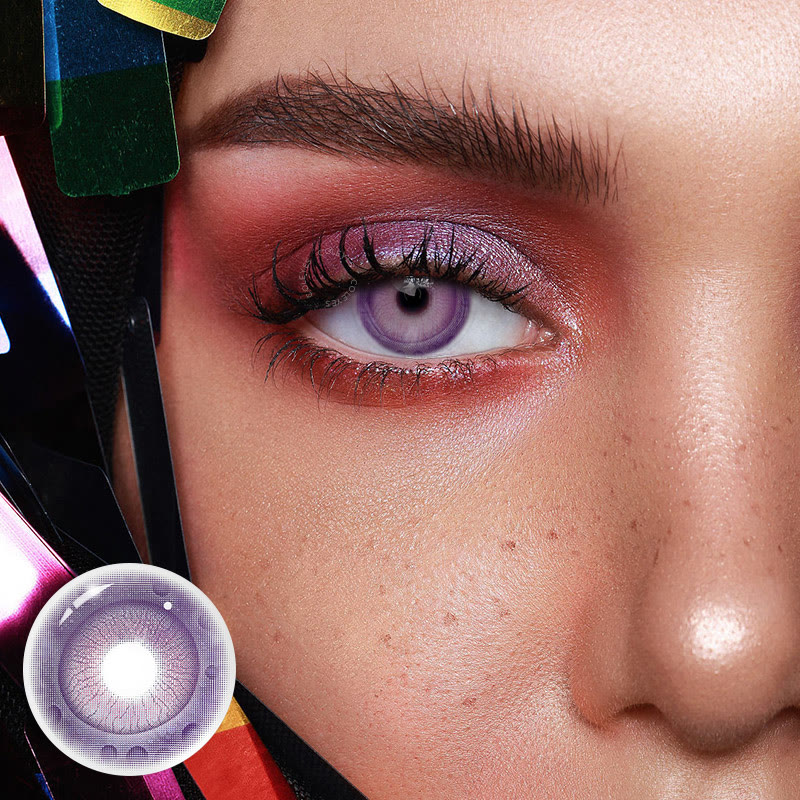

Violet contact lenses can turn even the darkest brown eyes into a bold, vivid shade, with pigments strong enough to show through fully. Whether you prefer light lavender tints or deeper plum and amethyst tones, you can find options that suit your natural eye color and desired intensity. In fact, choosing the right pair involves more than selecting a shade. Prescription strength, lens diameter, and replacement cycle affect both comfort and appearance. This piece explains how to choose violet contacts for dark eyes, natural-looking blends, cosplay styles, and everyday prescription use so your purchase suits your vision and style.
What to Expect From Violet Contact Lenses
Light violet, lilac, and lavender shades
Violet lenses come in more shades than most people expect, and a lens's final appearance depends heavily on its pigment pattern and opacity. Choosing the right option means knowing how each shade family will affect your iris before you buy.
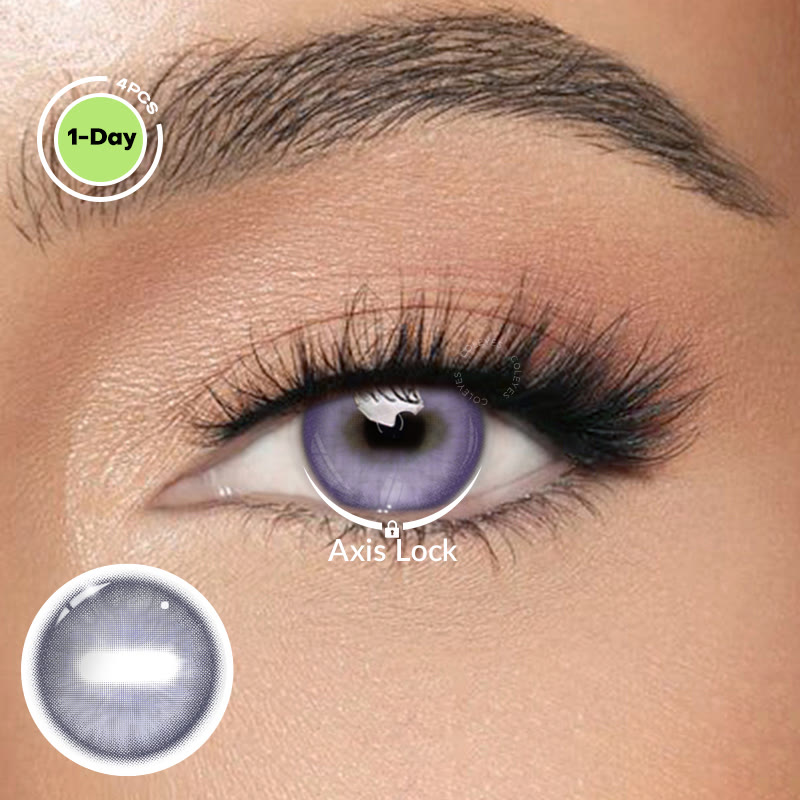
Light violet contact lenses create a soft, almost transparent wash of color. They work well when you want a subtle change instead of a dramatic new look. Enhancing lenses in this category add a gentle lavender or violet layer over your natural iris, creating a touch of mystery without overpowering your original eye color. Darker pupils can still show a soft, dreamy violet effect with light purple contacts, and the color change may stand out despite the lighter tone. Light purple-colored contacts can turn pale eyes, including blue, gray, and light green eyes, into a bright violet with a more transparent, glossy look than the same shade produces on darker eyes. Many brands offer one-tone, two-tone, and tri-tone lavender contact lenses, which lets you choose how natural or layered you want the final result to look.
Dark violet, plum, and amethyst shades
Dark violet contact lenses sit at the other end of the spectrum and create a bolder, more saturated change. Opaque lenses in this family provide full coverage, even over very dark irises. This makes them a common choice for wearers who want a complete amethyst look. These shades create a rich, deep purple on dark pupils with a calm yet strong presence. Many people describe the effect as mysterious or noble rather than harsh. Lighter eyes show a more direct and complete color change, with the original shade becoming a fully saturated dark purple. Amethyst has become one of the more popular fantasy purple shades sold throughout the US, UK, Canada, Australia, Europe, and the GCC region. Amethyst usually appears cooler and softer than theatrical violet, and it often suits light or medium eyes more comfortably. Darker irises generally need stronger opacity for the color to appear clearly in normal lighting.
Why the same shade looks different in daylight and photos
The same lens design rarely looks similar in every setting. Your natural eye color, lens opacity, tint pattern, surrounding lighting, and even your prescription or replacement schedule can affect the final result. A shade that seems subtle at home may look much more noticeable under office lighting, direct daylight, or camera flash. Deep violet lenses can show this change clearly over light blue or green eyes. The color may look striking, but it may not fully cover every part of the original iris. Pupil size, lens centering, and ambient lighting can also affect how much of your natural color remains visible. Comparing shade photos in daylight and indoor lighting before buying gives you a more accurate idea of how the lens will look once you wear it.
How to Choose Violet Contacts for Your Eye Color
Your natural eye color plays an important role in how violet contact lenses look once you put them on. The same shade can appear vivid on light eyes but subtle on dark eyes. To get the color effect you want, consider your natural iris color and choose a lens with the right level of opacity and pigmentation.
Violet Contacts for Dark Brown Eyes: Choose Opaque Coverage
Dark brown and black eyes typically need highly pigmented, opaque violet contact lenses to achieve a noticeable color change. Sheer enhancement tints may blend into the natural iris and produce little visible difference. Opaque designs provide stronger coverage, allowing the violet color to stand out while maintaining a clear pupil area for vision.
When choosing violet contacts for dark eyes, look for designs with rich pigmentation and layered patterns. Violet shades with reddish or warm undertones can complement the warmth of brown irises, creating a more balanced appearance. For a dramatic transformation, deeper purple tones can also provide striking contrast against naturally dark eyes.
Violet Contacts for Light Brown and Amber Eyes: Balance Coverage and Blending
Light brown and amber eyes offer more flexibility when choosing violet contact lenses. Since the natural iris is lighter, medium-coverage or enhancement tints can create a visible color shift without completely hiding the original eye color.
For a soft, dimensional look, consider violet shades with warm undertones or subtle color patterns. These can blend with the golden and honey tones in your natural iris. More opaque violet lenses are also an option when you prefer a brighter, more noticeable transformation.
Violet Contacts for Hazel Eyes: Consider Mixed Iris Colors
Hazel eyes often feature a combination of brown, green, and golden tones. Because of this natural color variation, a single, flat violet shade may look less realistic or blend unevenly with the iris.
Multi-tonal violet contact lenses can create a more balanced result by adding depth and dimension. Look for designs that combine different shades of purple with natural-looking iris patterns. Lighter hazel eyes may work well with sheer or medium-coverage lenses, while darker hazel eyes generally benefit from stronger pigmentation for a more visible violet effect.
Violet Contacts for Green Eyes: Choose a Soft Blend or Strong Contrast
Green eyes can create two distinct looks with violet contact lenses. Enhancement tints allow some of your natural green color to show through, producing a softer blend of green and violet. This option is ideal when you want a subtle color adjustment rather than a complete transformation.
For a bolder appearance, choose opaque violet lenses that provide stronger coverage. The contrast between purple and green can make your eyes stand out, especially when the lenses feature deeper violet tones or defined iris patterns. Your preferred level of coverage will determine whether the final look feels understated or dramatic.
Violet Contacts for Blue and Gray Eyes: Explore Sheer and Cool-Toned Shades
Blue and gray eyes often show violet contact lens colors clearly because their natural iris shades are relatively light. Even sheer enhancement tints can add a noticeable purple hue without completely covering the original eye color.
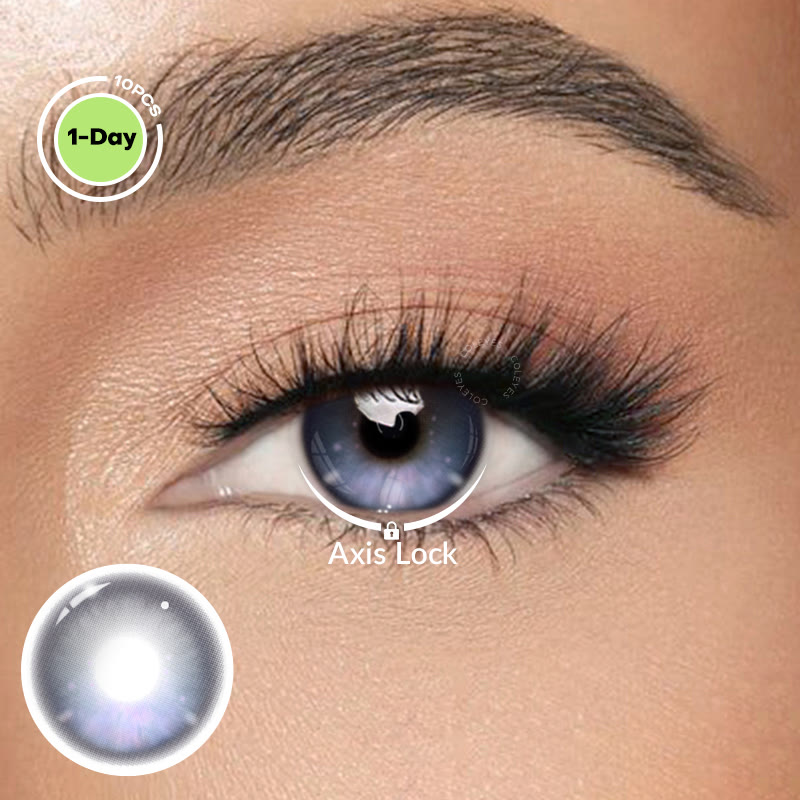
Cool-toned violet shades can complement blue eyes, creating a soft, harmonious appearance. For a more noticeable transformation, deeper purple lenses offer stronger contrast. Gray eyes also work well with violet tones, as the combination can create a subtle lavender effect or a more vivid purple appearance depending on the lens opacity and pattern.
When choosing violet contacts for blue or gray eyes, consider whether you want to preserve some of your natural color or create a more dramatic change. Sheer designs are suitable for a gentle color shift, while opaque lenses provide a more defined violet finish.
Match the Lens Design to Your Look
Beyond matching your iris color, the lens design determines whether violet contacts create a soft boost, a defined look, or a full costume change. Edge blending, limbal rings and diameter, plus pattern complexity shape the result.
Natural-looking violet contact lenses: Soft edges and layered iris patterns
Natural-looking violet contacts use layered, semi-transparent designs instead of one flat block of color. Translucent pigments allow some of your natural iris to show through, and realistic iris patterns add the radial lines, specks, and tonal changes found in real eyes. Soft gradients let the violet transition from the pupil outward, so the lens does not look flat or painted on. Multi-layered color systems often use a base tint to change the overall color, then add pigment layers for depth. Fine radial patterns mimic iris fibers, while subtle gradients reflect light naturally. This layered design separates a believable violet change from an obvious cosmetic overlay. It also lets the printed color work with your eye rather than sit over it.
Defined eyes: Limbal rings and printed diameter
A limbal ring is the darker outer edge of an iris design. It adds depth, frames the eye, and sharpens contrast without looking harsh if designed well. Choose no ring or a diffused version for a softer result. This softens the transition into the white of the eye and often looks more realistic. A fine, low-contrast ring creates clean definition without overpowering a natural look. Dark or thick rings make the eyes look rounder and more graphic.
Diameter also changes the final effect. Lenses printed at about 14.2mm usually create a realistic, natural fit. A 14.5mm design adds a slight enlarging effect, while larger sizes move toward a dramatic, doll-like look. The number on the box describes the full lens, but the graphic diameter, or the width of the printed color, determines how large your eyes appear.
Violet contacts for cosplay: Bold colors and character details
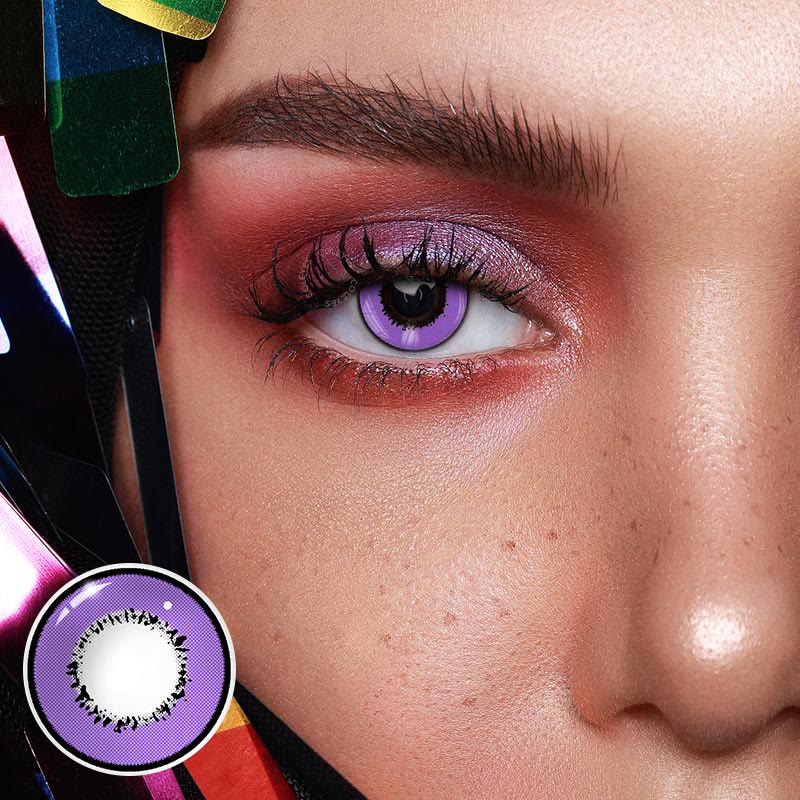
Cosplay requires different priorities. Costume-style violet lenses, such as galaxy-pattern designs with a 90-day cycle, 14.2mm diameter, and 38% water content, suit conventions and character events rather than subtle everyday wear. They are especially useful for cosplay enthusiasts who want vivid eye colors to bring a character design to life. Coordinating your eye color with complementary makeup can help complete the character-inspired look. Brands that focus on anime and manga styles use jagged details and sharp contrast that show clearly on camera and convention floors. Pigments in this category can change even the darkest brown eyes into a vivid violet gaze. Some collections combine a deep violet-magenta shade with a dark limbal ring to copy iconic fantasy characters. Purple is also a less common fashion color, so cosplay wearers rarely encounter matching looks at the same event.
Choose the Right Prescription, Fit, and Replacement Cycle
Choosing the perfect violet shade is only part of the process. Your contact lens prescription, eye fit, and replacement schedule are equally important for comfortable and safe wear. Before ordering violet contacts, make sure the lenses match your vision needs and follow the recommended wearing and replacement guidelines.
Violet Prescription Contact Lenses: Match Your Current Prescription
Purple prescription contacts combine vision correction with eye color enhancement. Depending on the available options, they may come in different prescription strengths for nearsightedness, farsightedness, and astigmatism.
Many colored contact lenses offer powers ranging from 0.00 (plano) to -6.00 in 0.25 increments, while some options may extend to -10.00 or even -15.00. Toric lenses are designed for people with astigmatism, and plus-power options may be available for farsightedness. However, prescription ranges vary by product and manufacturer.
When ordering, always match the lens power, base curve, and diameter to your current contact lens prescription. Check the values for your right eye (OD) and left eye (OS) separately, as they may differ. Keep in mind that a glasses prescription cannot be used directly for contact lenses because contact lens prescriptions include additional fitting measurements.
If you need custom toric violet contacts, allow extra time for production and delivery. Manufacturing may take several weeks, depending on the lens design and prescription requirements.
Non-Prescription Violet Contacts Still Need a Professional Fitting
non-prescription violet contacts, also known as plano lenses, have a power of 0.00. They change your eye color without correcting your vision, but that does not mean they can be purchased or worn without professional guidance.
Decorative contact lenses are medical devices, and a proper fitting is essential regardless of whether you need vision correction. An eye care professional should measure your eyes, determine the appropriate lens fit, and check how your eyes respond to the lenses.
Ill-fitting contacts can scratch the cornea and increase the risk of eye infections, conjunctivitis, and other complications. In severe cases, improper use may lead to permanent vision damage. A professional contact lens fitting helps ensure that your lenses are suitable for your eyes before you start wearing them.
Daily vs. Reusable Violet Contacts: Choose Based on Your Wearing Habits
Violet contact lenses are available in different replacement schedules, including daily disposable and reusable options. The best choice depends on how frequently you wear colored contacts and how much maintenance you are comfortable with.
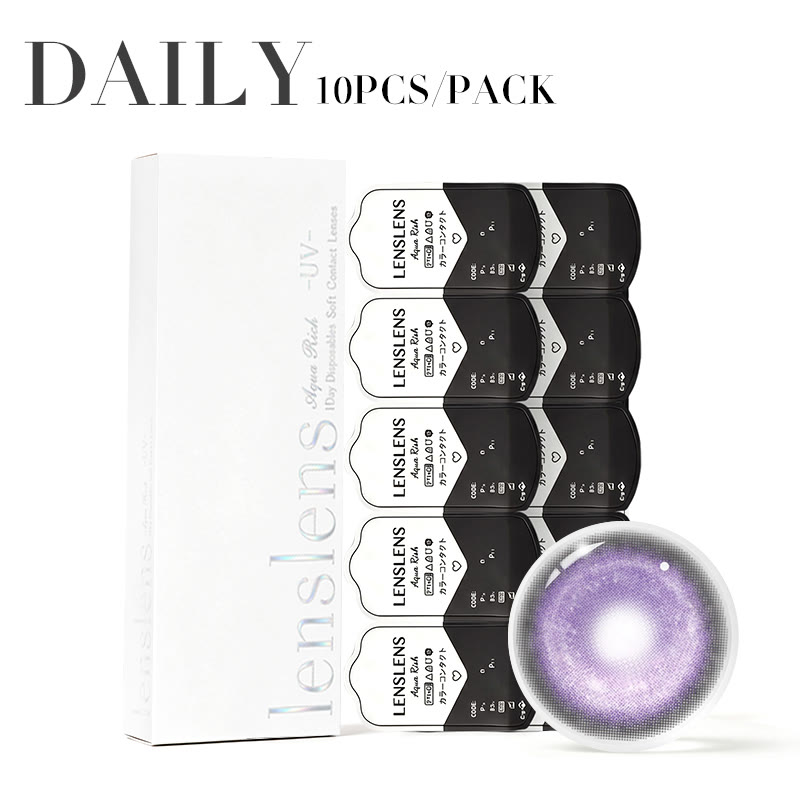
Daily disposable violet contacts are designed for single use. You wear a fresh pair each time and discard them afterward, so there is no need for cleaning or storage. They are a convenient option for occasional wearers, cosplay events, photoshoots, or anyone who enjoys changing eye colors frequently.
Reusable violet contacts may come with monthly or other manufacturer-specified replacement schedules. These lenses require proper cleaning and disinfection after each use, along with suitable contact lens storage solutions. Following the recommended care routine helps prevent deposits and contamination.
Rather than choosing a replacement cycle based on convenience alone, consider your wearing frequency, maintenance habits, and the manufacturer's instructions.
Replacement Periods Are Not Continuous Wear Times
A 30-day or yearly replacement schedule does not mean you can wear the same pair of contact lenses continuously for that entire period. It refers to how long the lenses can be used after opening, provided they are cared for correctly and worn according to the instructions.
Always follow the wearing-time recommendations provided by your eye care professional and the lens manufacturer. Remove your contacts before sleeping unless they are specifically approved for overnight wear. You should also take them out before swimming or showering to reduce exposure to waterborne microorganisms.
Good lens hygiene, appropriate wearing time, and timely replacement all help protect your eye health while allowing you to enjoy your violet eye color safely.
How to Shop for and Use Violet Lenses Safely
Buying violet contacts safely begins by confirming that the seller requires a prescription. Legitimate retailers ask for your doctor's name and phone number to verify it. Sellers that skip this step violate federal law and could face penalties of up to $200,000. Still, 53% of decorative lens buyers say they bought lenses without a prescription.
Choose a seller that verifies prescriptions when required
Retailers that request prescription details and verify them with your doctor operate legally. Avoid any site that sells lenses without this requirement.
Check product details instead of broad safety claims
Check the packaging for lot numbers and expiration dates, along with manufacturer information. Do not rely on vague claims. FDA testing found microbial contamination in 60% of counterfeit lenses and 27% of unapproved lenses.
Compare total costs, delivery times, and return terms
Some sellers provide free shipping when orders meet a minimum amount. Return periods range from 14 to 90 days. Sellers often exclude opened colored or toric lenses from returns.
Use reviews and try-on tools without treating them as guarantees
Virtual try-on results can vary based on lighting, skin tone, and eye shape. Use them as a guide, not a final preview.
Follow cleaning, storage, and wear instructions
Rub and rinse lenses with fresh solution. Replace your case every three months, and do not top off old solution.
Remove lenses and seek prompt eye care for pain, redness, or blurred vision
Remove your lenses right away and call your eye doctor if your eyes become red or painful, your vision blurs, or you notice discharge.
Conclusion
Violet contact lenses can create a genuine look with any eye color when you match the opacity and pattern to your natural iris. Dark eyes need bold, opaque coverage, while lighter eyes can look striking with soft tints that improve their natural color. Your chosen shade is only part of the equation. Prescription accuracy and lens diameter, along with your replacement schedule, affect how comfortable and natural your lenses feel each day.
Choose sellers who verify prescriptions, and arrange a proper fitting even for plano lenses. You can enjoy a safe, striking change with violet contacts when you do this right.